Abdominal Abscess: Antibiotics, Drainage or Surgery?
Abdominal Abscess & Intra-abdominal Infection
Abdominal Abscess: Antibiotics, Drainage or Surgery?
Dr-Alassaf
Nov 03, 2026
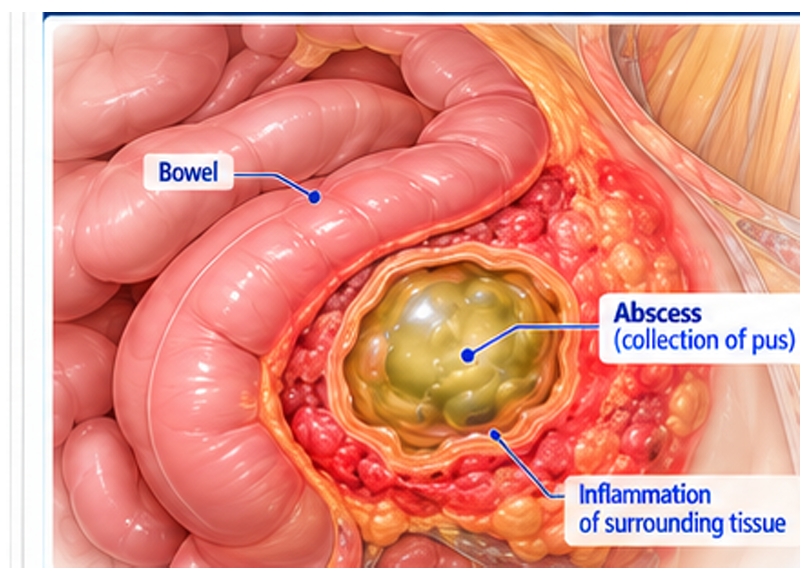
An abdominal abscess is a localised collection of infected fluid or pus. It may follow appendicitis,
diverticulitis, bowel perforation or abdominal surgery.
How the treatment decision is made
How does an abscess form?
The body sometimes walls off infection, creating a pocket that antibiotics cannot easily penetrate. Abscesses may
develop near bowel, in the pelvis, beneath the diaphragm or after an operation.
What symptoms are common?
Fever, persistent or localised abdominal pain, poor appetite, nausea and fatigue are common. Some patients have
minimal fever, particularly if older or immunosuppressed.
How is it identified?
CT is commonly used to identify the location, size and relationship to bowel and blood vessels. Ultrasound can
help in selected cases. Blood tests indicate inflammation but do not locate the abscess.
When are antibiotics enough?
Small, well-contained collections in stable patients may sometimes resolve with antibiotics and close monitoring.
Treatment depends on the source, size, accessibility and clinical response rather than a single size threshold.
What is image-guided drainage?
An interventional radiologist places a small tube through the skin into the collection using CT or ultrasound
guidance. The drain removes infected fluid, and samples may guide antibiotic treatment. Some abscesses cannot
be reached safely this way.
When is surgery necessary?
Surgery is considered if drainage is not feasible or fails, if there is ongoing bowel leakage, diffuse peritonitis, dead
tissue or worsening sepsis. The surgeon may drain the collection and repair or remove the underlying source.
What happens to the drain?
The team monitors drainage volume, symptoms and sometimes repeat imaging. Drains are removed when the
infection is controlled and the collection has sufficiently resolved; timing varies.
Can an abscess recur?
Yes, especially if the underlying source persists. Follow-up may include repeat imaging, further drainage or
treatment of the original bowel or biliary disease.
Frequently asked questions
Is an abscess the same as a tumour?
No. An abscess is an infected collection, although imaging and follow-up sometimes help distinguish other
conditions.
Will drainage hurt?
Local anaesthesia and sometimes sedation are used; discomfort and procedural risks are discussed beforehand.
Do I need antibiotics after drainage?
Often yes, usually for a tailored duration after adequate source control.
The key message
Treatment should address both the infected collection and the condition that caused it. Antibiotics, radiological
drainage and surgery are complementary options, not competing treatments.
Dr. Mohammed Alassaf
Consultant Bariatric & Gastrointestinal Surgeon
Dr. Alassaf is a leading expert in minimally invasive and bariatric surgery,
with extensive experience helping patients overcome obesity and related conditions.
Having completed advanced training in Australia and the Middle East, he is known
for his compassionate approach and evidence-based surgical care.