Abdominal Sepsis: When Emergency Surgery Is Needed to Control Infection
Dr-Alassaf
Nov 03, 2026
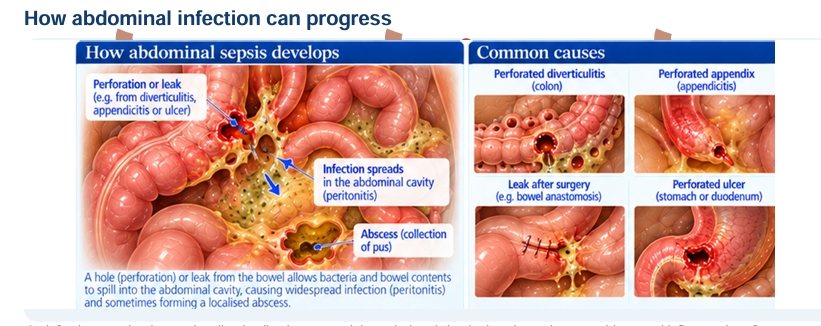
Abdominal sepsis is a potentially life-threatening condition in which an infection arising inside the abdomen leads
to organ dysfunction. It may develop after a perforated appendix, bowel perforation, diverticulitis, an infected
gallbladder or a complication following surgery.
Treatment has two equally important parts: supporting the patient's circulation and organs and controlling the
source of infection. Antibiotics are essential, but they may not be sufficient if an abscess, damaged bowel or
ongoing leak remains.
What is the difference between infection and sepsis?
An infection can remain localised. Sepsis occurs when the body's response to infection causes life-threatening
organ dysfunction. Warning signs can include confusion, rapid breathing, low blood pressure and reduced urine
output. Septic shock is a particularly severe form involving persistent circulatory failure.
What causes abdominal sepsis?
Important causes include perforated appendicitis, complicated diverticulitis, perforated peptic ulcer, ischaemic or
perforated bowel, postoperative anastomotic leak, intra-abdominal abscess and severe biliary infection. The
underlying cause determines whether drainage, surgery or another intervention is needed.
What symptoms require urgent attention?
Severe or worsening abdominal pain, fever or low body temperature, abdominal distension, repeated vomiting,
confusion, faintness, rapid breathing and reduced urine output are concerning. Older or immunosuppressed
patients may have less typical symptoms.
How is it diagnosed?
The team assesses vital signs, abdominal findings and organ function. Blood tests may include a blood count,
kidney and liver function, lactate and cultures where appropriate. CT imaging often identifies an abscess,
perforation, free fluid or another source. Very unstable patients may need urgent intervention before full imaging
What happens immediately in hospital?
Treatment begins with prompt intravenous antibiotics, fluid resuscitation when indicated, oxygen, monitoring and
support of affected organs. Patients with septic shock may need vasopressors and intensive care. At the
same time, the team determines how and when to control the infection source.
What does 'source control' mean?
It means eliminating the focus of infection and preventing further contamination. Examples include draining an
abscess, removing a perforated appendix, repairing a perforated ulcer, resecting dead bowel, treating a leaking
bowel join or relieving an obstructed infected biliary system.
Can an abscess be drained without an operation?
Yes. If an abscess is well defined and safely accessible, interventional radiology may place a drain through the
skin under ultrasound or CT guidance. Drainage is not appropriate for every collection, and an ongoing bowel leak
or widespread contamination may still require surgery.
When is emergency surgery necessary?
Surgery is often required when there is diffuse peritonitis, uncontrolled perforation, dead bowel, a source that
cannot be drained safely or persistent deterioration despite appropriate treatment. Source control should not be
delayed unnecessarily when it is urgently required.
Laparoscopic or open surgery?
Laparoscopy can be useful in selected patients, allowing inspection and treatment through small incisions. In
severe contamination, unstable patients or complex disease, an open approach may be safer. Conversion from
laparoscopy to open surgery is a safety decision, not a failure.
What if part of the bowel is damaged?
Nonviable or severely diseased bowel may need resection. The surgeon may reconnect the healthy ends or create
a temporary or permanent stoma depending on contamination, circulation, tissue quality and overall patient
stability.
Why might more than one operation be needed?
Some critically ill patients require staged treatment. In damage-control surgery, the immediate priority is to stop
contamination and stabilise the patient, with further reconstruction or reassessment after intensive care
resuscitation.
What are the risks of emergency surgery?
Risks include bleeding, wound or intra-abdominal infection, injury to nearby structures, bowel-join leakage, need
for a stoma, blood clots and heart, lung or kidney complications. The risk depends heavily on how unwell the
patient is before treatment.
How long does recovery take?
Recovery varies widely. A patient with a drained localised abscess may recover more quickly than someone who
has septic shock or needs bowel resection. Hospital care may involve intravenous antibiotics, nutritional support,
physiotherapy and sometimes intensive care.
Will antibiotics continue after surgery?
Usually for a limited period after adequate source control, adjusted to the patient's response, infection severity and
microbiology. Longer treatment may be required if source control is incomplete or complications persist.
What warning signs matter after discharge?
Recurrent fever, worsening pain, repeated vomiting, increasing abdominal swelling, wound discharge, confusion,
faintness or reduced urine output require prompt assessment. A patient recovering from abdominal sepsis should
not ignore a sudden decline.
Frequently Asked Questions
Does sepsis always require an operation?
No. Some infections can be treated with antibiotics and image-guided drainage, but uncontrolled contamination or
dead bowel often requires surgery.
Can antibiotics alone treat a perforated bowel?
Selected contained perforations may be managed without immediate surgery, but free perforation with generalised
peritonitis usually needs urgent source control.
Why might a stoma be necessary?
A stoma may be safer than joining bowel ends when infection, poor blood supply or physiological instability makes
healing uncertain.
Is abdominal sepsis contagious?
Sepsis itself is not contagious; the underlying infectious organism may or may not be transmissible.
Can a patient recover completely?
Many patients recover well, but severe sepsis can cause prolonged weakness or organ problems, and follow-up
may be needed.
The key message
Abdominal sepsis is an emergency. Antibiotics and resuscitation support the patient, but definitive
recovery often depends on controlling the source of infection. The safest approach may be radiological
drainage, laparoscopic surgery or open surgery, chosen according to the cause and the patient's
condition.
Patient-information note: severe abdominal pain with fever, confusion, faintness or worsening general condition requires urgent medical
assessment. This article is educational and does not replace emergency care
Abdominal sepsis is a potentially life-threatening condition in which an infection arising inside the abdomen leads
to organ dysfunction. It may develop after a perforated appendix, bowel perforation, diverticulitis, an infected
gallbladder or a complication following surgery.
Treatment has two equally important parts: supporting the patient's circulation and organs and controlling the
source of infection. Antibiotics are essential, but they may not be sufficient if an abscess, damaged bowel or
ongoing leak remains.
What is the difference between infection and sepsis?
An infection can remain localised. Sepsis occurs when the body's response to infection causes life-threatening
organ dysfunction. Warning signs can include confusion, rapid breathing, low blood pressure and reduced urine
output. Septic shock is a particularly severe form involving persistent circulatory failure.
What causes abdominal sepsis?
Important causes include perforated appendicitis, complicated diverticulitis, perforated peptic ulcer, ischaemic or
perforated bowel, postoperative anastomotic leak, intra-abdominal abscess and severe biliary infection. The
underlying cause determines whether drainage, surgery or another intervention is needed.
What symptoms require urgent attention?
Severe or worsening abdominal pain, fever or low body temperature, abdominal distension, repeated vomiting,
confusion, faintness, rapid breathing and reduced urine output are concerning. Older or immunosuppressed
patients may have less typical symptoms.
How is it diagnosed?
The team assesses vital signs, abdominal findings and organ function. Blood tests may include a blood count,
kidney and liver function, lactate and cultures where appropriate. CT imaging often identifies an abscess,
perforation, free fluid or another source. Very unstable patients may need urgent intervention before full imaging
What happens immediately in hospital?
Treatment begins with prompt intravenous antibiotics, fluid resuscitation when indicated, oxygen, monitoring and
support of affected organs. Patients with septic shock may need vasopressors and intensive care. At the
same time, the team determines how and when to control the infection source.
What does 'source control' mean?
It means eliminating the focus of infection and preventing further contamination. Examples include draining an
abscess, removing a perforated appendix, repairing a perforated ulcer, resecting dead bowel, treating a leaking
bowel join or relieving an obstructed infected biliary system.
Can an abscess be drained without an operation?
Yes. If an abscess is well defined and safely accessible, interventional radiology may place a drain through the
skin under ultrasound or CT guidance. Drainage is not appropriate for every collection, and an ongoing bowel leak
or widespread contamination may still require surgery.
When is emergency surgery necessary?
Surgery is often required when there is diffuse peritonitis, uncontrolled perforation, dead bowel, a source that
cannot be drained safely or persistent deterioration despite appropriate treatment. Source control should not be
delayed unnecessarily when it is urgently required.
Laparoscopic or open surgery?
Laparoscopy can be useful in selected patients, allowing inspection and treatment through small incisions. In
severe contamination, unstable patients or complex disease, an open approach may be safer. Conversion from
laparoscopy to open surgery is a safety decision, not a failure.
What if part of the bowel is damaged?
Nonviable or severely diseased bowel may need resection. The surgeon may reconnect the healthy ends or create
a temporary or permanent stoma depending on contamination, circulation, tissue quality and overall patient
stability.
Why might more than one operation be needed?
Some critically ill patients require staged treatment. In damage-control surgery, the immediate priority is to stop
contamination and stabilise the patient, with further reconstruction or reassessment after intensive care
resuscitation.
What are the risks of emergency surgery?
Risks include bleeding, wound or intra-abdominal infection, injury to nearby structures, bowel-join leakage, need
for a stoma, blood clots and heart, lung or kidney complications. The risk depends heavily on how unwell the
patient is before treatment.
How long does recovery take?
Recovery varies widely. A patient with a drained localised abscess may recover more quickly than someone who
has septic shock or needs bowel resection. Hospital care may involve intravenous antibiotics, nutritional support,
physiotherapy and sometimes intensive care.
Will antibiotics continue after surgery?
Usually for a limited period after adequate source control, adjusted to the patient's response, infection severity and
microbiology. Longer treatment may be required if source control is incomplete or complications persist.
What warning signs matter after discharge?
Recurrent fever, worsening pain, repeated vomiting, increasing abdominal swelling, wound discharge, confusion,
faintness or reduced urine output require prompt assessment. A patient recovering from abdominal sepsis should
not ignore a sudden decline.
Frequently Asked Questions
Does sepsis always require an operation?
No. Some infections can be treated with antibiotics and image-guided drainage, but uncontrolled contamination or
dead bowel often requires surgery.
Can antibiotics alone treat a perforated bowel?
Selected contained perforations may be managed without immediate surgery, but free perforation with generalised
peritonitis usually needs urgent source control.
Why might a stoma be necessary?
A stoma may be safer than joining bowel ends when infection, poor blood supply or physiological instability makes
healing uncertain.
Is abdominal sepsis contagious?
Sepsis itself is not contagious; the underlying infectious organism may or may not be transmissible.
Can a patient recover completely?
Many patients recover well, but severe sepsis can cause prolonged weakness or organ problems, and follow-up
may be needed.
The key message
Abdominal sepsis is an emergency. Antibiotics and resuscitation support the patient, but definitive
recovery often depends on controlling the source of infection. The safest approach may be radiological
drainage, laparoscopic surgery or open surgery, chosen according to the cause and the patient's
condition.
Patient-information note: severe abdominal pain with fever, confusion, faintness or worsening general condition requires urgent medical
assessment. This article is educational and does not replace emergency care.