Adhesive Small Bowel Obstruction: When Can Surgery Be Avoided?
Small Bowel Obstruction & Abdominal Adhesions
Adhesive Small Bowel Obstruction: When Can Surgery Be Avoided?
Dr-Alassaf
Nov 03, 2026
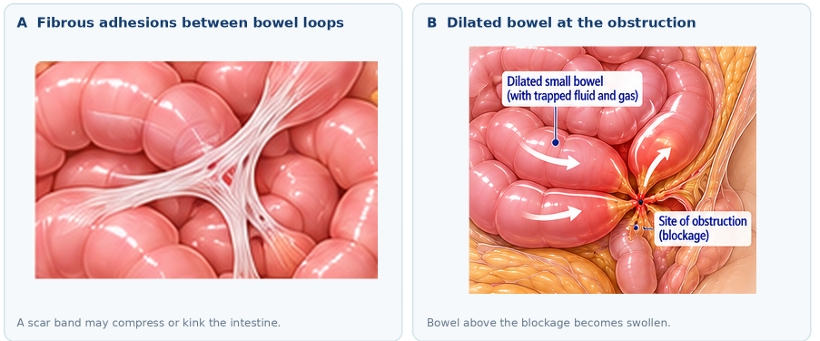
Scar tissue inside the abdomen, called adhesions, can develop after an operation or inflammation. Sometimes
an adhesion traps or kinks the small bowel and causes an obstruction.
What is an adhesion?
Adhesions are fibrous bands that form between tissues after healing. Most cause no symptoms, but a band may
bend or compress the bowel, preventing fluid and gas from moving normally.
What are the symptoms?
Cramping abdominal pain, vomiting, bloating and inability to pass gas or stool are common. Some patients still pass
stool early in an obstruction.
How is obstruction assessed?
CT helps locate the blockage, assess its severity and look for signs of strangulation or bowel ischaemia.
Examination, blood tests, urine output and repeated assessment are also important.
When can surgery be avoided?
Stable patients without signs of peritonitis, strangulation or ischaemia can often be treated initially with intravenous
fluids, electrolyte correction, bowel rest and nasogastric decompression when needed.
What is a water-soluble contrast challenge?
In selected patients, water-soluble contrast is given and its progression is checked on imaging. Passage into the
colon within an appropriate interval suggests a greater chance of resolution without surgery; it also helps guide
reassessment.
When is urgent surgery required?
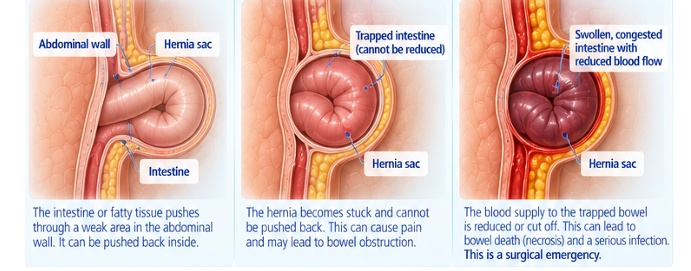
Constant severe pain, peritonitis, worsening instability, CT evidence of compromised bowel, closed-loop obstruction
or failure of appropriate non-operative management may require an operation.
What happens during surgery?
The surgeon releases the constricting adhesions (adhesiolysis). If bowel has lost its blood supply or is perforated, a
segment may need to be removed. Laparoscopy may be possible in selected patients, but complex adhesions
increase injury risk.
Can adhesions come back?
Yes. Any abdominal operation can create new adhesions. Surgeons use careful tissue handling and selected
adhesion-reduction strategies, but recurrence cannot be eliminated.
Frequently asked questions
Does every episode need surgery?
No. Many uncomplicated adhesive obstructions resolve with careful hospital-based treatment.
Can I manage it at home?
Suspected bowel obstruction requires medical assessment; vomiting and dehydration can worsen quickly.
Is laparoscopic surgery always safer?
Not always. Markedly distended bowel or dense adhesions may make open surgery safer.
The key message
The key is distinguishing a simple obstruction that may settle from a strangulated or closed-loop obstruction that
needs prompt surgery.
This article is general patient education, not a substitute for assessment or personalised surgical advice. Seek emergency medical
care for severe or rapidly worsening symptoms.
Dr. Mohammed Alassaf
Consultant Bariatric & Gastrointestinal Surgeon
Dr. Alassaf is a leading expert in minimally invasive and bariatric surgery,
with extensive experience helping patients overcome obesity and related conditions.
Having completed advanced training in Australia and the Middle East, he is known
for his compassionate approach and evidence-based surgical care.