Sleeve Gastrectomy or Gastric Bypass: How Do We Choose?
Obesity & Weight Management
Sleeve Gastrectomy or Gastric Bypass: How Do We Choose?
Dr-Alassaf
Nov 02, 2026
Sleeve gastrectomy and Roux-en-Y gastric bypass are both effective metabolic operations, but they are not
interchangeable. The best procedure is not simply the one associated with the greatest average weight loss. It is the
operation whose anatomy, benefits and long-term trade-offs best fit the individual patient.
For me, procedure selection begins with reflux and hiatal anatomy, but it also includes metabolic disease, previous
surgery, nutritional status, eating pattern and the patient's priorities. The decision should be made before surgery
with a clear understanding of what each operation changes.
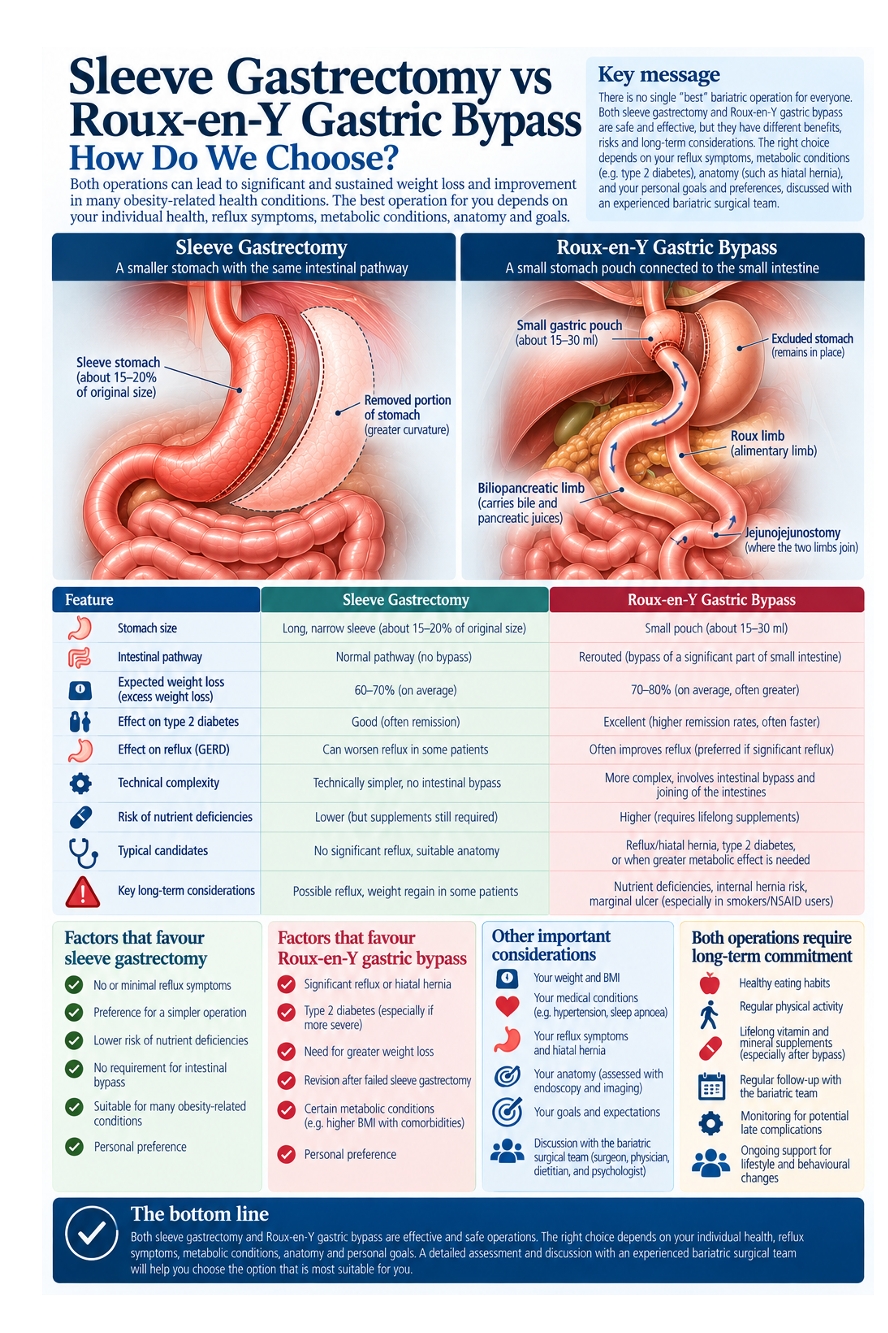
The fundamental anatomical difference
Sleeve gastrectomy removes much of the greater-curvature stomach and leaves a narrow gastric tube while
preserving the normal intestinal route. Roux-en-Y creates a small gastric pouch and reroutes the small bowel, so
food bypasses most of the stomach and the proximal small intestine.
When sleeve gastrectomy can be a good choice
Sleeve can be an excellent option for an appropriately selected patient without significant reflux. It avoids an
intestinal bypass and the mesenteric spaces created by Roux-en-Y, while still producing substantial weight loss and
metabolic improvement.
When gastric bypass can be a better fit
Roux-en-Y is particularly attractive when significant gastro-oesophageal reflux is present. It can also be selected for
metabolic reasons or as a revisional operation after sleeve when reflux or another defined problem develops.
Why I do not choose an operation from BMI alone
BMI is useful, but it does not describe reflux, oesophageal disease, hiatal anatomy, nutritional risk, previous
operations or the patient's metabolic profile. Two patients with the same BMI may therefore be offered different
operations.
Reflux is one of the biggest differences
Sleeve can cause new reflux or worsen existing GERD in some patients. Roux-en-Y generally has a more
favourable reflux profile. For that reason, significant established reflux is one of the strongest factors pushing my
recommendation toward bypass.
What if a hiatal hernia is present?
A hiatal hernia is an anatomical defect that should be considered separately from the bariatric procedure itself. In my
practice, if a hiatal hernia is present, I repair it during the operation. However, repairing the hiatus does not
automatically make sleeve the best choice in a patient with severe reflux.
How the operations differ nutritionally
Both procedures require long-term nutritional attention. After sleeve, deficiencies can occur because intake is
reduced and deficiencies may already exist before surgery. After bypass, intestinal rerouting adds a greater risk of
iron, calcium, vitamin B12 and other deficiencies, so lifelong supplementation and laboratory surveillance are
especially important.
How their surgical risks differ
Sleeve has a long gastric staple line and specific risks including leak, stenosis, twisting and reflux. Bypass adds two
gastrointestinal anastomoses and risks including marginal ulcer and internal hernia, as well as greater nutritional
complexity.
Mesenteric defects are unique to bypass
Creating a Roux-en-Y configuration produces potential spaces through which small bowel can later herniate. I
routinely close all mesenteric defects during bypass to reduce this risk. Even after closure, unexplained abdominal
pain later in life still deserves appropriate assessment.
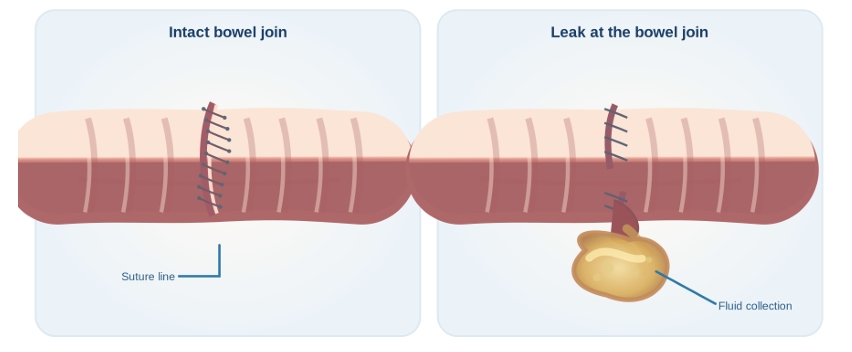
Leak testing in both operations
I routinely perform an intraoperative leak test after sleeve gastrectomy and Roux-en-Y gastric bypass. It is an
additional check of the newly created staple line or anastomosis before surgery is completed, although it cannot
eliminate the possibility of a delayed leak.
What about diabetes?
Both operations can substantially improve type 2 diabetes. Roux-en-Y has powerful metabolic effects, but procedure
choice should still consider the whole patient rather than diabetes in isolation.
What about expected weight loss?
Population averages can differ between procedures, but individual results overlap considerably. I do not believe an
operation should be chosen from a single promised percentage of weight loss. Durable health improvement is the
more important objective.
Does bypass mean a harder recovery?
Not necessarily in day-to-day terms. Both are usually performed laparoscopically and follow enhanced-recovery
principles. Bypass is anatomically more complex, but early recovery is influenced by many individual factors.
Why previous surgery matters
Previous abdominal or bariatric operations can alter anatomy and create adhesions. In revisional surgery,
endoscopy, imaging and the original operative details may be needed before selecting the safest reconstruction.
What if sleeve later causes severe reflux?
Persistent reflux after sleeve should first be properly investigated. In selected patients with medically refractory
GERD, conversion from sleeve to Roux-en-Y gastric bypass is an established revisional strategy.
The same preparation applies to both
My patients undergo dietitian assessment, full metabolic and nutritional screening and a low-calorie high-protein
liver-reduction diet before either operation. This prepares the patient nutritionally and improves laparoscopic
exposure.
The same thrombosis precautions matter
Both operations carry venous-thromboembolism risk. Early mobilisation is essential, and in my routine pathway
patients receive DVT prophylaxis for two weeks after surgery unless their individual risk requires modification.
PPI and gallstone prevention
I routinely prescribe PPI therapy after bariatric surgery. During rapid weight loss I also offer UDCA when appropriate
to reduce the risk of cholesterol gallstone formation.
Long-term follow-up is not optional
Whichever operation is chosen, follow-up monitors weight trajectory, reflux, metabolic disease, nutrition and late
complications. Surgery is one component of lifelong obesity treatment.
How I make the choice in practice
I do not regard sleeve and bypass as interchangeable procedures. In a patient without significant reflux and
with suitable anatomy, sleeve may be an excellent choice. In a patient with significant established reflux, I
generally favour Roux-en-Y gastric bypass. A hiatal hernia is repaired when present. The final decision also
incorporates metabolic disease, nutritional status, previous surgery and the patient's own priorities after a
balanced discussion of the long-term consequences of each operation.
Frequently Asked Questions
Which operation is better?
Neither is universally better. The correct choice depends on the individual patient's anatomy and disease profile.
Is sleeve the safer operation because it is simpler?
It is anatomically simpler, but 'safer' depends on which risk is being considered and on the individual patient.
If I have reflux, does that automatically mean bypass?
Not automatically, but significant established reflux is a major factor favouring Roux-en-Y in my practice.
If my hiatal hernia is repaired, can I still have sleeve?
Sometimes. The severity of reflux and oesophageal findings still matter.
Which operation needs more vitamins?
Both need supplementation and monitoring, but nutritional surveillance is particularly important after bypass
because absorption is altered.
Which operation is better for diabetes?
Both can be very effective. Metabolic disease is considered alongside reflux, anatomy and other factors.
Can sleeve be changed to bypass later?
Yes, when there is a clear indication such as difficult reflux or another defined problem.
Can bypass be reversed?
It can sometimes be revised or reversed, but it should be regarded as a major long-term reconstruction.
Will either operation guarantee permanent weight loss?
No. Both are powerful tools, but long-term nutrition, activity, follow-up and metabolic factors remain important.
Do both require lifelong follow-up?
Yes.
The key message
The choice between sleeve gastrectomy and Roux-en-Y gastric bypass should be personalised. Reflux and
hiatal anatomy are particularly important, but metabolic disease, nutritional considerations, previous
surgery and patient preferences also matter. The aim is to choose the operation that offers the best
long-term fit for that individual patient.
Patient-information note: procedure selection is individualised. This article is educational and does not replace personal assessment by your bariatric surgical, medical and dietetic team.
Dr. Mohammed Alassaf
Consultant Bariatric & Gastrointestinal Surgeon
Dr. Alassaf is a leading expert in minimally invasive and bariatric surgery,
with extensive experience helping patients overcome obesity and related conditions.
Having completed advanced training in Australia and the Middle East, he is known
for his compassionate approach and evidence-based surgical care.