Acute Diverticulitis: When Is Emergency Surgery Necessary?
Diverticular Disease & Diverticulitis
Acute Diverticulitis: When Is Emergency Surgery Necessary?
Dr-Alassaf
Nov 02, 2026
Acute diverticulitis occurs when one or more small pouches in the colon (diverticula) become inflamed. It
commonly affects the sigmoid colon. Most patients do not need emergency surgery, but some develop
complications that require urgent hospital treatment.
What is the difference between diverticulosis and diverticulitis?
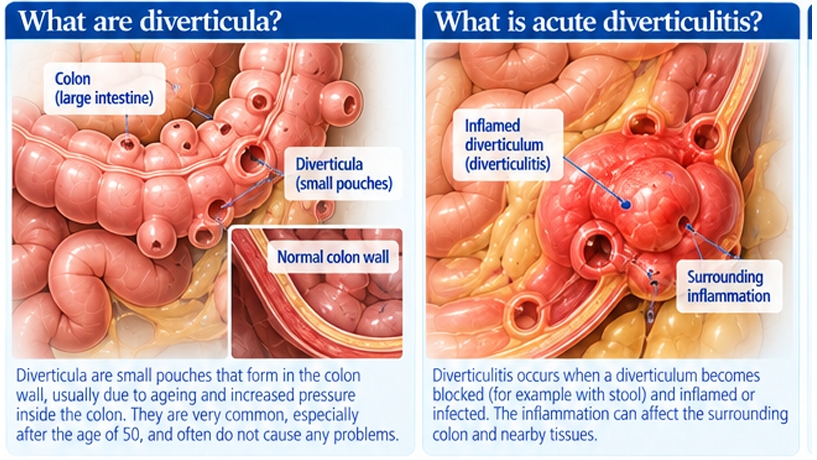
Diverticulosis means that pouches are present in the wall of the large bowel. Many people have diverticula without
symptoms. Diverticulitis means inflammation involving a diverticulum and nearby tissues; it may be uncomplicated
or associated with abscess, perforation, fistula or obstruction.
What symptoms should patients recognise?
The most typical symptom is persistent lower abdominal pain, often on the left. Fever, nausea, altered bowel
habits and tenderness may occur. Severe pain, a rigid abdomen, faintness or signs of sepsis require emergency
assessment.
How is diverticulitis diagnosed?
Clinical examination and blood tests help assess inflammation and severity. Contrast-enhanced CT is commonly
used to confirm the diagnosis, identify abscess or free perforation, and rule out other causes of abdominal pain.
Imaging and laboratory tests are tailored to pregnancy, kidney function and the patient’s condition.
What does uncomplicated diverticulitis mean?
There is inflammation without a major complication such as a drainable abscess, generalised peritonitis, fistula or
obstruction. Many otherwise well patients can recover with fluids, symptom control and close follow-up,
sometimes as outpatients. Antibiotics are used selectively rather than automatically for every mild uncomplicated
episode.
When are antibiotics or hospital admission needed?
Antibiotics are generally indicated for complicated disease, systemic illness, frailty, immunosuppression and
selected higher-risk presentations. Admission may be needed for dehydration, severe pain, inability to tolerate
fluids, significant comorbidity or concern about complications.
What is a diverticular abscess?
A localised collection of infected fluid may develop beside the colon. Small abscesses can sometimes respond to
antibiotics; larger or accessible collections may need image-guided percutaneous drainage. If drainage is not
possible or treatment fails, surgery may be required.
What is a perforation?
A diverticulum may perforate. A contained leak can sometimes be managed without surgery, but widespread
contamination of the abdominal cavity with generalised peritonitis usually requires urgent operative source
control. CT findings must always be interpreted alongside the clinical examination.
When is emergency surgery necessary?
Emergency surgery is considered for generalised purulent or faecal peritonitis, uncontrolled sepsis, clinical
deterioration despite treatment, certain obstructions, or failure of appropriate antibiotics and drainage. Not every
CT finding of free air mandates an operation in a stable patient; the whole clinical picture determines the plan.
What happens during the operation?
The surgeon identifies the affected colon and assesses the extent of inflammation and contamination. Diseased
sigmoid colon may need to be removed. Depending on stability, tissue quality and contamination, the healthy
ends may be reconnected (primary anastomosis), sometimes with a temporary protective stoma, or a Hartmann
procedure may be chosen with an end colostomy.
Is a stoma always necessary?
No. Some patients can safely undergo resection with immediate reconnection. A stoma is more likely in unstable
patients, severe contamination or when reconnection would be unsafe. Whether a stoma can later be reversed
depends on the operation and subsequent recovery.
Can surgery be laparoscopic?
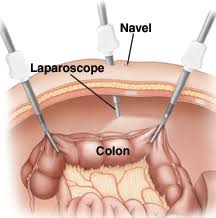
In appropriately selected stable patients, a laparoscopic approach may be feasible. Severe inflammation,
unstable physiology or extensive contamination can make an open operation safer. The objective is reliable
control of infection rather than simply the smallest incision.
What if diverticulitis keeps recurring?
Elective sigmoid resection may be discussed for persistent symptoms, recurrent episodes that substantially impair
quality of life, fistula, stricture or other defined problems. The decision is individualised; a fixed number of attacks
alone is not a sufficient indication for surgery.
Will I need a colonoscopy afterwards?
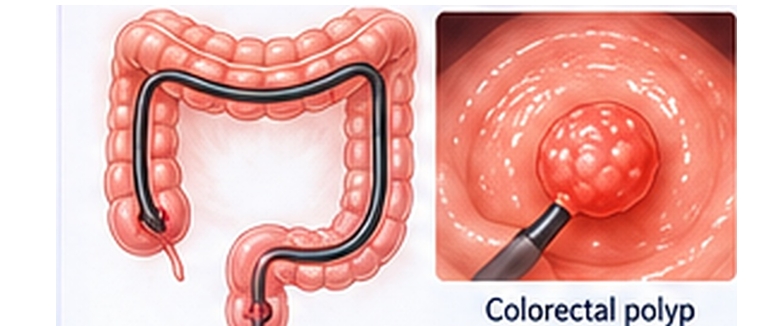
Colonoscopy is often considered after recovery, particularly after complicated diverticulitis or a first episode
without a recent high-quality examination, to exclude a cancer that can mimic diverticulitis. It is generally delayed
until acute inflammation settles, often about 6–8 weeks, unless there is a reason to investigate sooner.
How long does recovery take?
Mild uncomplicated episodes may improve over several days. Recovery after emergency resection is longer and
depends on infection severity, the type of operation and whether a stoma was formed. Early mobilisation,
nutritional recovery and postoperative follow-up are important.
Can another attack be prevented?
Long-term measures include a high-quality fibre-rich diet after the acute episode has resolved, regular physical
activity, maintaining a healthy weight and avoiding smoking. Nuts and seeds do not routinely need to be avoided.
No strategy guarantees prevention.
When should I seek urgent medical attention?
Seek urgent assessment for worsening or severe abdominal pain, persistent fever, a rigid or swollen abdomen,
repeated vomiting, inability to pass stool or gas, fainting, confusion or marked deterioration. These may indicate
obstruction, perforation or sepsis.
Frequently asked questions
Does every attack require antibiotics?
No. Mild uncomplicated cases in otherwise healthy patients may be managed without them, while complicated or
higher-risk disease generally requires antibiotics.
Does every abscess need surgery?
No. Antibiotics and, when appropriate, image-guided drainage can often control an abscess.
Will I definitely need a colostomy if I have emergency surgery?
No. It depends on your condition, contamination and whether a safe reconnection can be performed.
Can diverticulitis be mistaken for cancer?
Yes. Imaging may not always distinguish them, which is why follow-up colonic evaluation is sometimes
recommended.
Is elective surgery mandatory after two episodes?
No. Decisions depend on complications, symptom burden and patient-specific risks and preferences.
The key message
Most acute diverticulitis can be managed without emergency surgery. Complications such as
uncontrolled infection, widespread peritonitis, obstruction or failure of non-operative treatment may
make an operation necessary. Early assessment and a treatment plan tailored to disease severity are
essential.
Patient-information note: this article is educational and does not replace individual clinical assessment. New severe abdominal
symptoms warrant urgent medical evaluation.
Dr. Mohammed Alassaf
Consultant Bariatric & Gastrointestinal Surgeon
Dr. Alassaf is a leading expert in minimally invasive and bariatric surgery,
with extensive experience helping patients overcome obesity and related conditions.
Having completed advanced training in Australia and the Middle East, he is known
for his compassionate approach and evidence-based surgical care.