Bariatric Surgery: Who Is It For and How Do We Choose the Operation?
Obesity & Weight Management
Bariatric Surgery: Who Is It For and How Do We Choose the Operation?
Dr-Alassaf
Nov 02, 2026
Bariatric surgery is not simply an operation to make the stomach smaller. Modern metabolic and bariatric surgery is
a treatment for obesity as a chronic disease and for many of the medical problems associated with it. The decision
to operate - and the choice between sleeve gastrectomy and Roux-en-Y gastric bypass - should come after a
structured assessment of the whole patient.
The goal is not to choose the most fashionable operation. It is to select the procedure that best matches the patient's
weight history, metabolic health, reflux symptoms, anatomy, previous surgery, nutritional status and long-term
needs.
Obesity is a medical disease, not simply a matter of willpower
Obesity is influenced by genetics, appetite regulation, metabolism, environment, medications, sleep, behaviour and
many other factors. For patients with clinically significant obesity, lifestyle treatment remains important but may not
produce enough durable weight loss on its own. Bariatric surgery changes gastrointestinal anatomy and physiology
in ways that reduce hunger, improve satiety and alter metabolic signalling.
Who may be considered for metabolic and bariatric surgery?
Modern eligibility is based on BMI together with metabolic disease, previous treatment and the overall clinical
picture. Patients with a BMI of 35 kg/m² or more are commonly considered for surgery, and surgery also has an
established role in selected patients with BMI 30-34.9 kg/m², particularly when type 2 diabetes or other
obesity-related disease is present and non-surgical treatment has not produced a durable result.
Which health problems can improve after surgery?
Weight loss can improve or reduce the burden of type 2 diabetes, high blood pressure, obstructive sleep apnoea,
fatty liver disease, abnormal blood lipids, joint symptoms and several other obesity-related conditions. The degree of
improvement varies between patients.
Is bariatric surgery suitable for everyone who meets a BMI threshold?
No. Eligibility is not the same as readiness. Surgery requires the ability to understand the operation, follow a staged
postoperative diet, attend follow-up, take supplements when prescribed and report warning symptoms promptly.
Important medical, nutritional or behavioural issues may need to be addressed first.
The two primary operations I offer
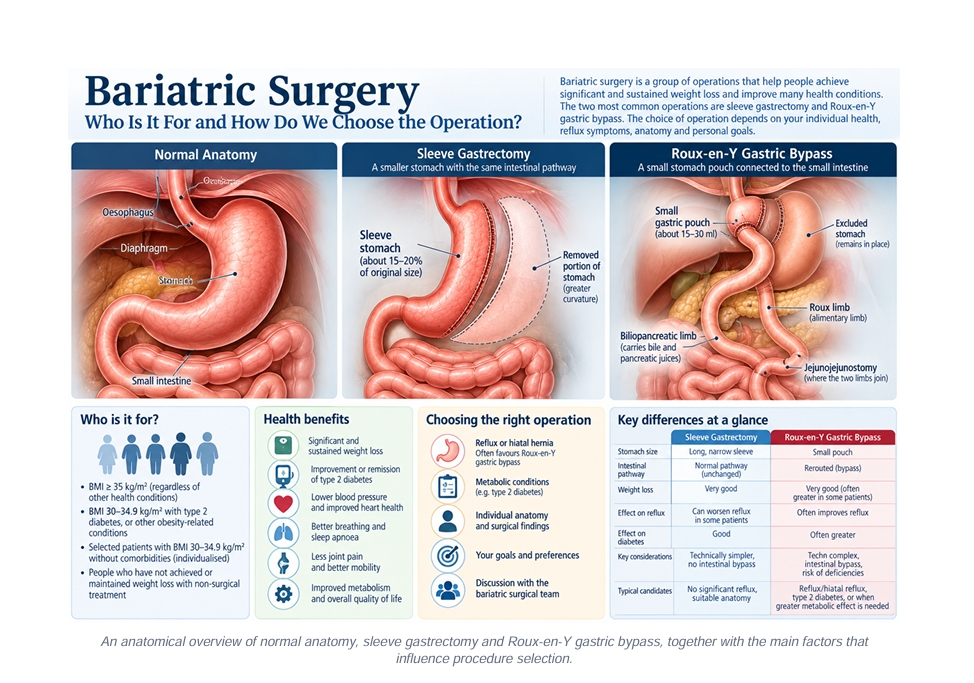
Sleeve gastrectomy and Roux-en-Y gastric bypass are the main primary bariatric procedures in my practice. I
also perform revisional bariatric surgery when a previous operation has produced a significant anatomical problem,
difficult reflux, complications or an inadequate long-term result. Each operation has strengths and limitations.
How sleeve gastrectomy works
During sleeve gastrectomy, most of the greater-curvature side of the stomach is removed, leaving a narrow tubular
stomach. Food continues through the stomach into the duodenum along the normal intestinal route. The operation
reduces meal capacity and also changes appetite-related hormonal signalling.
How Roux-en-Y gastric bypass works
Roux-en-Y gastric bypass creates a small gastric pouch and connects it to a segment of small intestine. Food
therefore bypasses most of the stomach and the first part of the small bowel. The operation combines reduced
intake with powerful metabolic and hormonal effects.
Why reflux matters when choosing the operation
Reflux is one of the most important factors in my procedure selection. Sleeve gastrectomy can cause new reflux or
worsen existing reflux in some patients. When a patient has significant established gastro-oesophageal reflux
disease, I generally prefer Roux-en-Y gastric bypass because its anatomy is usually more favourable for reflux
control.
What if there is a hiatal hernia?
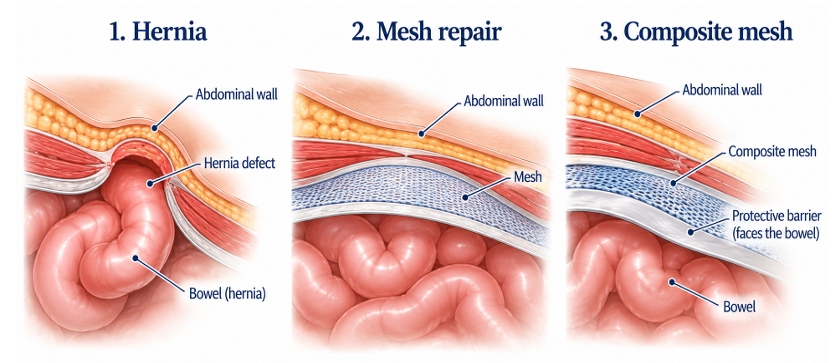
A hiatal hernia occurs when part of the stomach moves upward through the diaphragmatic opening around the
oesophagus. It can contribute to reflux and can affect the result of bariatric surgery. In my practice, when a hiatal
hernia is present, I repair it during the bariatric operation.
Why previous abdominal surgery matters
Previous surgery can alter anatomy and create adhesions. Previous bariatric surgery is particularly important
because revisional operations are technically more complex. The original operation, current anatomy, symptoms,
weight trajectory, endoscopy and imaging are reviewed before deciding what revision - if any - is appropriate.
The preoperative dietitian assessment
Every patient sees a dietitian before surgery. The assessment looks at meal pattern, protein intake, eating
behaviour, hydration, supplements and the patient's understanding of how eating will change after surgery. Good
bariatric results depend on combining the operation with sustainable long-term nutritional behaviour.
The full metabolic and nutritional screen
I perform a full metabolic screen before surgery. This allows diabetes control, liver and kidney function, blood count
and important nutritional markers to be assessed. Deficiencies such as iron, vitamin B12, folate or vitamin D
deficiency should be identified and treated.
Why I use a low-calorie, high-protein diet before surgery
Before surgery, patients follow a low-calorie, high-protein diet designed to reduce liver volume. In obesity, the
left lobe of the liver can be enlarged and fatty and lies directly over the upper stomach. Reducing liver glycogen and
fat makes the liver lighter and easier to retract, improving laparoscopic exposure.
What happens during the operation to check safety?
I routinely perform an intraoperative leak test after sleeve gastrectomy and gastric bypass. A leak test is one part
of assessing the integrity of the newly created staple line or anastomosis before the operation is completed. It
does not make the later risk of leak zero.
Why mesenteric defects are closed during gastric bypass
Roux-en-Y gastric bypass creates potential spaces in the small-bowel mesentery through which bowel can later
herniate, producing an internal hernia and sometimes obstruction or compromised blood supply. I routinely close
all mesenteric defects created during bypass to reduce this risk.
Preventing blood clots
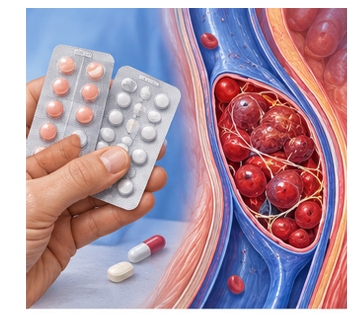
Obesity and abdominal surgery both increase the risk of venous thromboembolism. Prevention includes early
mobilisation and mechanical measures in hospital, together with anticoagulant prophylaxis according to individual
risk. In my routine pathway, patients continue DVT prophylaxis for two weeks after surgery, unless there is a
clinical reason to modify the plan.
Why patients receive a PPI
A proton-pump inhibitor reduces gastric acid exposure during the early healing period. I routinely prescribe PPI
therapy after bariatric surgery. The exact duration can be adjusted according to the procedure, symptoms and
individual risk factors.
Gallstones during rapid weight loss
Rapid weight loss increases the risk of cholesterol gallstone formation. I offer ursodeoxycholic acid
(UDCA/ursodiol) after weight-loss surgery to reduce gallstone formation during the rapid weight-loss phase,
provided it is appropriate for the individual patient.
What results should patients expect?
Both sleeve and Roux-en-Y can produce major weight loss and improvement in obesity-related disease, but results
vary. The aim is not a particular number on the scale alone. Better diabetes control, improved mobility, reduced
sleep apnoea and improved quality of life can be equally important outcomes.
What bariatric surgery cannot do by itself
Surgery changes physiology, but it does not automatically create good food choices, physical activity, regular
follow-up or healthy coping strategies. Weight regain can occur, and nutritional deficiencies can develop silently.
Why long-term follow-up matters
Follow-up monitors weight trajectory, metabolic disease, reflux, nutritional status and any late complications. Blood
tests and supplements continue according to the operation and individual results. Patients who feel completely
well still need nutritional surveillance.
How I approach procedure selection
I do not regard sleeve gastrectomy and gastric bypass as interchangeable operations. I first look at the
patient's reflux history, hiatal anatomy, metabolic disease, eating pattern, previous surgery, nutritional
status and overall risk. A patient without significant reflux may be an excellent candidate for sleeve. A
patient with significant reflux will usually be steered toward Roux-en-Y gastric bypass. If a hiatal hernia is
found, it is repaired. The final decision is made with the patient after discussing the benefits, compromises
and long-term requirements of each operation.
Frequently Asked Questions
Is bariatric surgery only for people with a BMI over 40?
No. Modern indications are broader and include many patients with BMI 35 or above, as well as selected patients in
the BMI 30-34.9 range when metabolic disease or inadequate durable response to non-surgical treatment is
present.
Which is better: sleeve or bypass?
Neither is universally better. Sleeve may suit one patient extremely well, while bypass may be more appropriate for
another. Significant reflux is one of the clearest reasons I favour Roux-en-Y over sleeve.
If I have a hiatal hernia, can I still have bariatric surgery?
Yes. A hiatal hernia can be repaired during the bariatric operation. The presence and severity of reflux still
influence which bariatric procedure is preferable.
Do I need to lose weight before surgery?
The preoperative low-calorie, high-protein diet is primarily intended to reduce liver volume and improve operative
exposure. It is not a test of whether you can lose all the required weight without surgery.
Why do I need a dietitian?
Because smaller intake makes food quality more important, not less. Protein, hydration, vitamins and eating
behaviour are essential for safe recovery and durable results.
Will surgery cure my diabetes?
Many patients experience major improvement and some achieve remission, but no individual patient should be
promised a cure.
Is bariatric surgery reversible?
Sleeve gastrectomy permanently removes part of the stomach. Roux-en-Y anatomy can sometimes be revised or
reversed, but it should be regarded as a major long-term reconstruction.
Will I need vitamins for life?
Long-term supplementation and laboratory monitoring are important after both operations, particularly after gastric
bypass.
Can I regain weight after surgery?
Yes. Significant regain deserves assessment for dietary, metabolic, medication-related and anatomical causes.
What symptoms after surgery should never be ignored?
Persistent rapid heart rate, fever, worsening abdominal or shoulder pain, breathlessness, chest pain, repeated
vomiting, inability to drink.
The key message
Bariatric surgery is not one operation for one type of patient. It is a personalised metabolic treatment. Good
results begin with careful selection, dietitian and metabolic preparation, choosing sleeve or Roux-en-Y
according to the patient's disease and anatomy, and committing to long-term nutritional and surgical
follow-up
Dr. Mohammed Alassaf
Consultant Bariatric & Gastrointestinal Surgeon
Dr. Alassaf is a leading expert in minimally invasive and bariatric surgery,
with extensive experience helping patients overcome obesity and related conditions.
Having completed advanced training in Australia and the Middle East, he is known
for his compassionate approach and evidence-based surgical care.