Bowel Perforation and Peritonitis: When Is Emergency Surgery Needed?
Bowel Perforation & Peritonitis
Bowel Perforation and Peritonitis: When Is Emergency Surgery Needed?
Dr-Alassaf
Nov 02, 2026
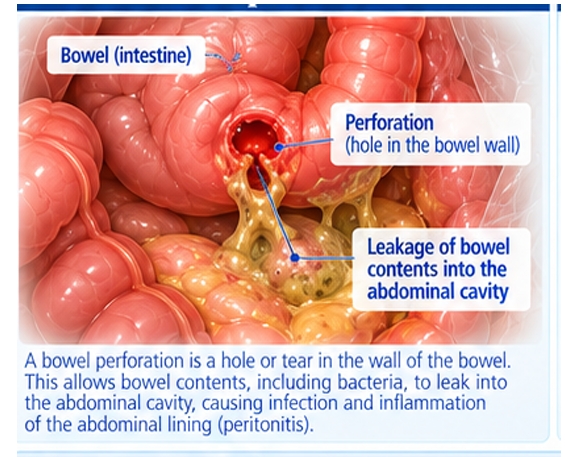
A bowel perforation is a hole through the wall of the stomach, small intestine or colon. It may allow air, fluid and
intestinal contents to escape into the abdominal cavity, causing inflammation and sometimes serious infection.
Suspected perforation with peritonitis requires emergency hospital assessment.
What is peritonitis?
The peritoneum is the thin lining of the abdominal cavity. When it becomes inflamed by leaking gastrointestinal
contents, patients may develop severe pain, abdominal rigidity, fever and systemic illness. Bacterial contamination
can progress to sepsis and organ dysfunction
What causes bowel perforation?
Common causes include perforated diverticulitis, peptic ulcer disease, appendicitis, bowel obstruction, ischaemia,
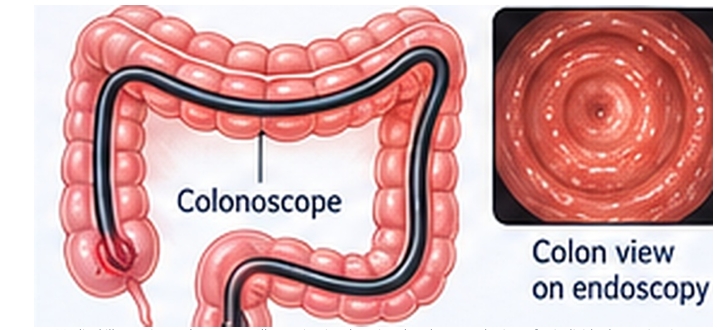
inflammatory bowel disease, malignancy, trauma and occasionally complications of endoscopy or surgery. The
location and cause determine treatment.
What symptoms should prompt emergency assessment?
Severe or rapidly worsening abdominal pain, marked tenderness or a rigid abdomen, fever, vomiting, abdominal
distension, faintness, confusion or a rapid heartbeat require urgent evaluation. Older or immunosuppressed
patients may have less typical signs. Do not wait for every symptom to develop.
How is it diagnosed?
Diagnosis combines examination, vital signs, blood tests including inflammatory markers, renal function and lactate
when appropriate, and imaging. CT of the abdomen and pelvis is often the most informative investigation in stable
patients, helping identify free air, fluid, abscess and the likely source. Unstable patients may need immediate
treatment without delaying for CT.
What happens first in hospital?
The team assesses breathing and circulation, starts intravenous access and fluids as indicated, gives pain relief
and broad-spectrum antibiotics promptly when intra-abdominal infection is suspected, and arranges urgent surgical
review. Patients are usually kept fasting. Resuscitation and source control are coordinated rather than performed
as isolated steps.
Does every perforation require an operation?
Many cases of free perforation with diffuse peritonitis need urgent surgery. However, a small contained perforation
or localised abscess in a stable patient can sometimes be managed with antibiotics, observation and/or
image-guided drainage. The decision depends on the cause, extent of contamination, imaging, physiology and
response to treatment.
What does emergency surgery involve?
The operation may be laparoscopic or open. The surgeon identifies the source, controls leakage and
contamination, and chooses the safest definitive treatment. Options include closing a perforation, removing
diseased bowel, creating an anastomosis or forming a temporary or permanent stoma. Abdominal washout and
drainage may be used selectively. In severe sepsis, a staged or damage-control approach may be necessary.
When might a stoma be necessary?
If a segment of bowel must be removed, reconnecting the ends immediately is not always safe. Severe
contamination, poor blood supply, unstable physiology or high leak risk may favour a stoma. Whether it can later
be reversed depends on the underlying disease and recovery.
What are the main risks?
Complications include wound infection, intra-abdominal abscess, anastomotic leak when a join is made, bleeding,
blood clots, pneumonia, sepsis, organ dysfunction and need for further intervention. Risks vary substantially with
illness severity and the extent of surgery.
What is recovery like?
Recovery is highly individual. Some patients recover within days; those with widespread peritonitis, bowel
resection or sepsis may require prolonged hospital care, nutritional support and rehabilitation. Eating is resumed as
bowel function and clinical condition permit. Follow-up also addresses the underlying cause, such as diverticular
disease, ulcer disease or cancer.
When should I seek help after discharge?
Return urgently for increasing abdominal pain, fever, repeated vomiting, inability to drink, increasing distension,
fainting, breathlessness, wound discharge or deterioration in general condition. Patients with a stoma should seek
advice for absent output accompanied by pain or vomiting, or signs of dehydration.
Frequently asked questions
Can a perforation heal without surgery?
Selected contained perforations can, with close monitoring and appropriate treatment; diffuse peritonitis often
needs an operation.
Will the surgeon always remove part of the bowel?
No. Repair, resection or other source-control treatment depends on the cause and tissue condition.
Will I definitely need a stoma?
No. A stoma is used only when it is the safer option for the individual situation.
Is laparoscopic surgery possible?
Sometimes. The approach depends on stability, contamination, anatomy and operative findings.
How can another episode be prevented?
Prevention depends on the cause: for example, treating H. pylori, reviewing NSAID use, or arranging follow-up
after diverticulitis.
The key message
Bowel perforation can be life-threatening. Early assessment, resuscitation, antibiotics when indicated and
timely control of the source of contamination are crucial. Some contained perforations can be treated
without surgery, but widespread peritonitis often requires urgent intervention.
Educational information only. Severe abdominal pain or suspected peritonitis requires immediate in-person
emergency assessment.
Dr. Mohammed Alassaf
Consultant Bariatric & Gastrointestinal Surgeon
Dr. Alassaf is a leading expert in minimally invasive and bariatric surgery,
with extensive experience helping patients overcome obesity and related conditions.
Having completed advanced training in Australia and the Middle East, he is known
for his compassionate approach and evidence-based surgical care.