Preparing for Bariatric Surgery: A Complete Preoperative Guide
Obesity & Weight Management
Preparing for Bariatric Surgery: A Complete Preoperative Guide
Dr-Alassaf
Nov 02, 2026
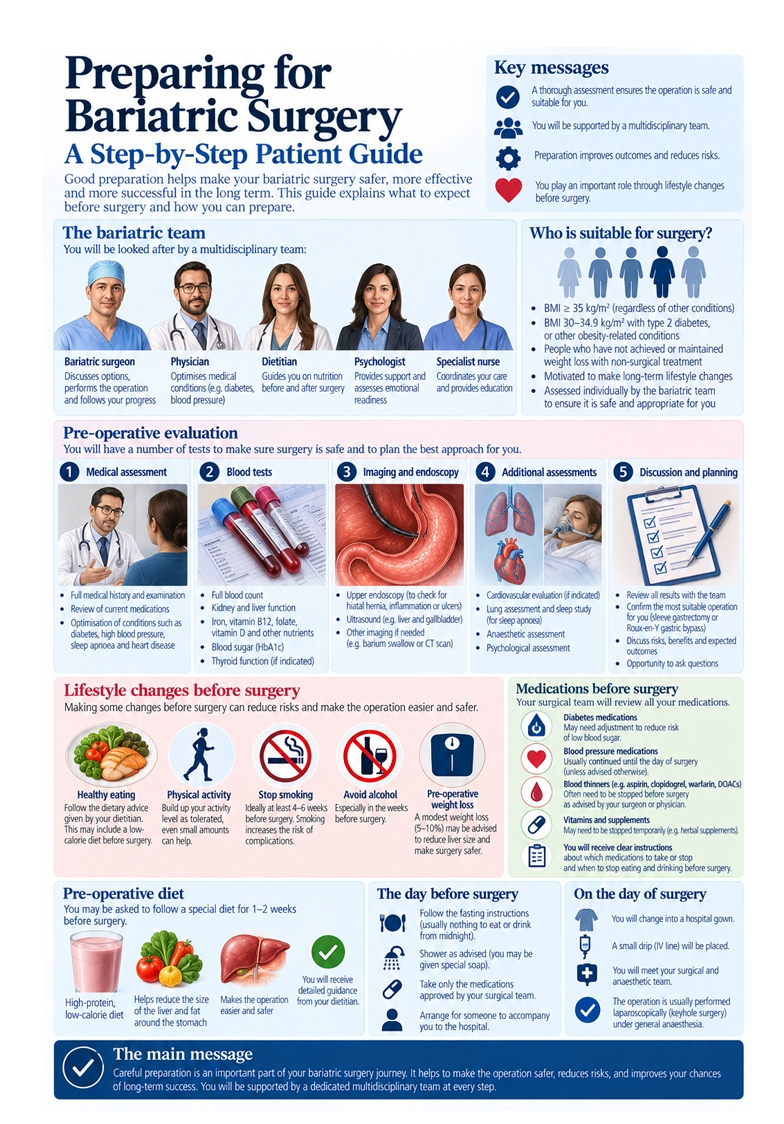
Preparation for bariatric surgery is part of the treatment itself. The aim is not only to confirm that an operation can be
performed safely, but also to identify medical and nutritional issues, choose the correct procedure and prepare you
for the changes that follow surgery.
A well-prepared patient understands why the operation has been chosen, what eating will be like afterwards, which
medicines need adjustment, how blood clots are prevented and which symptoms should prompt medical attention.
The multidisciplinary assessment
Bariatric surgery works best as part of a structured pathway. Surgical assessment is combined with medical, dietetic
and anaesthetic input as required. The aim is to understand the whole patient rather than simply measure weight.
Your medical history matters
Diabetes, high blood pressure, sleep apnoea, reflux, liver disease, previous abdominal operations, previous bariatric
surgery and current medications can all affect operative planning and postoperative care.
Why I perform a full metabolic and nutritional screen
Before surgery I obtain a full metabolic assessment. This helps assess diabetes control, blood count, kidney and
liver function and important nutritional markers. Deficiencies should be recognised and corrected rather than carried
into a period of reduced postoperative intake.
The dietitian visit before surgery
Every patient sees a dietitian before the operation. The consultation reviews current eating patterns, protein intake,
hydration, supplements and the staged postoperative diet. It also gives patients an opportunity to understand how
eating behaviour must change after surgery
Why the liver matters during bariatric surgery
The left lobe of the liver lies directly over the upper stomach. In patients with obesity it may be enlarged and fatty,
making laparoscopic exposure more difficult. Reducing liver volume can make the operation technically easier and
improve access to the stomach and hiatus.
My low-calorie, high-protein liver-reduction diet
Before surgery I ask patients to follow a low-calorie, high-protein diet. Its immediate purpose is to reduce liver
glycogen and fat so that the liver becomes lighter and easier to retract. It is not a test of willpower and it is not
intended to achieve all the patient's required weight loss before surgery.
Why protein is emphasised
Protein helps support lean body mass and healing while calorie restriction drives liver-volume reduction. The exact
diet is guided by the dietitian so that patients know what to eat rather than trying an unsupervised crash diet.
Assessment of reflux and the hiatus
Reflux symptoms are reviewed carefully because they can influence procedure selection. Significant established
reflux generally pushes my recommendation toward Roux-en-Y gastric bypass rather than sleeve gastrectomy. If a
hiatal hernia is present, I repair it during the bariatric operation.
Do I need an endoscopy?
Endoscopy may be appropriate depending on symptoms, history and the operation being considered. It can identify
oesophagitis, Barrett's oesophagus, ulceration, hiatal hernia and other upper gastrointestinal pathology that may
influence surgical planning.
Sleep apnoea and respiratory assessment
Obstructive sleep apnoea is common in patients with obesity and is important for anaesthesia and postoperative
respiratory care. Known or suspected sleep apnoea should be identified before surgery, and patients using CPAP
should tell the team.
Medication review
Diabetes medications, anticoagulants, antiplatelet drugs, antihypertensives and other medicines may require
adjustment around surgery. Patients should follow a specific perioperative plan rather than stopping medicines
independently.
Diabetes medications
Reduced calorie intake before surgery and fasting around the operation can change insulin and glucose-lowering
requirements. Medication plans therefore need to be individualised to reduce both high and low blood glucose.
Blood-thinning medication
Anticoagulants and antiplatelet drugs require careful planning to balance bleeding and thrombosis risk. The timing of
interruption and restart depends on the drug and the reason it was prescribed.
Smoking and nicotine
Smoking and nicotine increase perioperative risk and can impair healing. They are particularly important after gastric
bypass because smoking increases marginal-ulcer risk. Patients should stop according to the bariatric programme
and seek help if needed.
Alcohol
Alcohol should be discussed openly before surgery. Intake may need to be reduced or stopped, and alcohol
handling can change after bariatric surgery, particularly after gastric bypass.
Physical activity before surgery
Improving mobility before surgery can support cardiovascular fitness and makes early postoperative walking easier.
The aim is appropriate gradual activity rather than extreme exercise immediately before an operation.
Planning for thrombosis prevention
Obesity and abdominal surgery increase venous-thromboembolism risk. Patients should understand the importance
of early walking and postoperative anticoagulant injections. In my routine pathway DVT prophylaxis continues for
two weeks after surgery unless individual risk requires a different plan.
What should I prepare at home?
Have the recommended postoperative fluids and foods available, arrange transport and support, obtain prescribed
medications and understand the injection technique if anticoagulant prophylaxis is to continue at home.
The day before surgery
Follow the hospital's fasting instructions exactly. Take only the medicines you have been told to take and arrive with
the required documentation and equipment such as CPAP if advised.
What happens on the day of surgery?
You will meet the surgical and anaesthetic teams, have final safety checks and receive venous access. Bariatric
operations are generally performed laparoscopically under general anaesthesia. The exact operative plan is
reconfirmed before proceeding.
Preparing for life after surgery
Before the operation, patients should already understand hydration, protein intake, diet progression, vitamin
supplementation, mobilisation and warning symptoms. Learning these principles before surgery makes the first
postoperative days much easier.
Why preparation improves long-term success
The operation changes gastrointestinal physiology, but long-term success still depends on nutrition, follow-up and
recognition of problems. Preoperative preparation establishes these habits before the rapid changes of the
postoperative period begin.
My preoperative pathway
Every patient is assessed individually. My routine pathway includes dietitian review, a full metabolic and
nutritional screen and a low-calorie high-protein liver-reduction diet before surgery. Reflux and hiatal
anatomy are considered when choosing between sleeve and Roux-en-Y; significant reflux generally favours
bypass, and I repair a hiatal hernia when present. Patients are also prepared for postoperative PPI therapy,
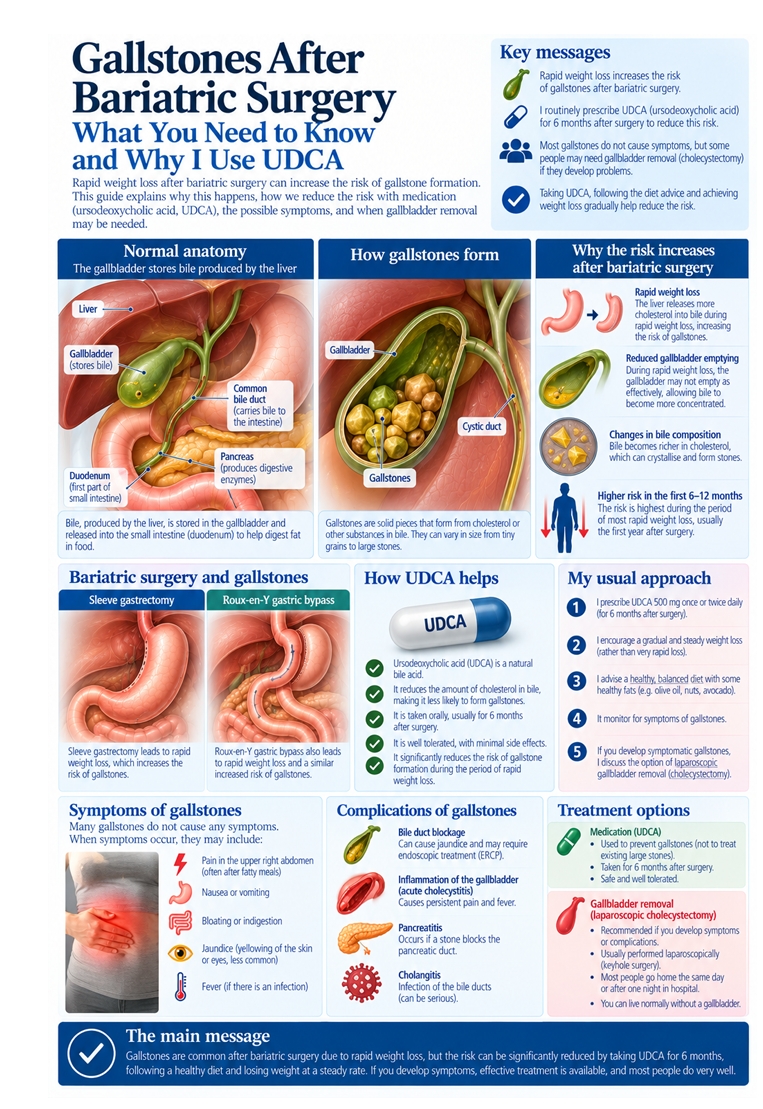
two weeks of DVT prophylaxis and UDCA during rapid weight loss when appropriate.
Frequently Asked Questions
Do I have to lose a specific amount of weight before surgery?
Not necessarily. The immediate purpose of my preoperative diet is liver reduction. Individual programmes may set
additional goals when clinically appropriate.
Why do I need a dietitian if surgery will reduce my appetite?
Because the quality of a much smaller food intake becomes more important. Protein, hydration, vitamins and eating
behaviour are central to safe recovery.
Can I stop my diabetes medication when I start the liver diet?
No. Reduced intake can change medication requirements, so follow the specific plan given by your medical team.
Should I stop blood thinners myself?
No. Their interruption and restart must be planned according to your clotting and bleeding risks.
Why is sleep apnoea important?
It can affect anaesthesia, oxygenation and postoperative monitoring.
Do I need to stop smoking?
Yes. Smoking increases surgical and healing risks and is particularly problematic after gastric bypass.
Why is the preoperative diet high in protein?
It supports lean body mass and healing while calories are restricted to reduce liver volume.
What if I cannot follow the liver diet?
Contact the dietitian or bariatric team rather than abandoning it or improvising a different diet.
Will I receive instructions for after surgery before I come to hospital?
Yes. Patients should understand the staged diet, hydration, medications, DVT prevention and warning symptoms in
advance.
Can surgery be postponed if a problem is found?
Yes. Correcting an important medical or nutritional problem before surgery can be safer than proceeding
immediately.
The key message
Good bariatric surgery starts before the day of the operation. Dietitian preparation, metabolic and
nutritional screening, careful medication planning and a low-calorie high-protein liver-reduction diet help
make surgery safer and prepare patients for the long-term changes that follow.
Patient-information note: fasting, medication changes, diet duration and investigations are individualised. Follow the instructions given by your own bariatric and anaesthetic teams.
Dr. Mohammed Alassaf
Consultant Bariatric & Gastrointestinal Surgeon
Dr. Alassaf is a leading expert in minimally invasive and bariatric surgery,
with extensive experience helping patients overcome obesity and related conditions.
Having completed advanced training in Australia and the Middle East, he is known
for his compassionate approach and evidence-based surgical care.