Surgery and reduced mobility can increase the risk of deep-vein thrombosis (DVT) and pulmonary embolism (PE). The prevention plan depends on your procedure and individual risk factors.
What is a DVT or pulmonary embolism?
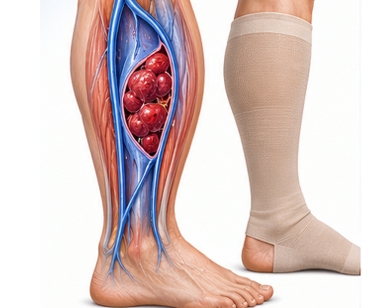
A DVT is a clot in a deep vein, often in the leg. If part of the clot travels to the lungs it may cause a pulmonary embolism, which can be life-threatening.
Who is at higher risk?
Risk rises with major surgery, prolonged immobility, previous thrombosis, active cancer, some hormonal treatments and certain medical conditions. Bleeding risk must also be assessed before prescribing preventive anticoagulation.
How does early walking help?
Getting out of bed and walking as soon as medically safe improves venous blood flow and supports lung and bowel recovery. Your team will tell you when and how to mobilise.
What other prevention methods are used?
Mechanical compression devices or stockings may be used in hospital. Some patients need preventive anticoagulant injections or tablets, sometimes continuing after discharge. Not every patient needs the same measures.
What symptoms suggest a DVT?
New one-sided calf or leg swelling, pain, warmth or redness deserves urgent medical assessment, particularly after recent surgery.
When is emergency help required?
Sudden unexplained shortness of breath, chest pain, coughing blood, collapse or severe breathlessness may indicate PE and requires emergency care immediately.
Frequently Asked Questions
Should everyone receive blood-thinning injections?
No. The benefit must be balanced against bleeding risk and the procedure.
Does walking alone eliminate clot risk?
No. Higher-risk patients may also need medication or mechanical prevention.
The key message
Follow your individual clot-prevention plan, mobilise safely and treat symptoms of DVT or PE as urgent.
This article provides general patient education and does not replace individual medical assessment, informed consent or advice from your treating team. Treatment decisions depend on your circumstances.
Dr. Mohammed Alassaf
Consultant Bariatric & Gastrointestinal Surgeon
Dr. Alassaf is a leading expert in minimally invasive and bariatric surgery,
with extensive experience helping patients overcome obesity and related conditions.
Having completed advanced training in Australia and the Middle East, he is known
for his compassionate approach and evidence-based surgical care.