Roux-en-Y Gastric Bypass: A Complete Patient Guide
Obesity & Weight Management
Roux-en-Y Gastric Bypass: A Complete Patient Guide
Dr-Alassaf
Nov 02, 2026
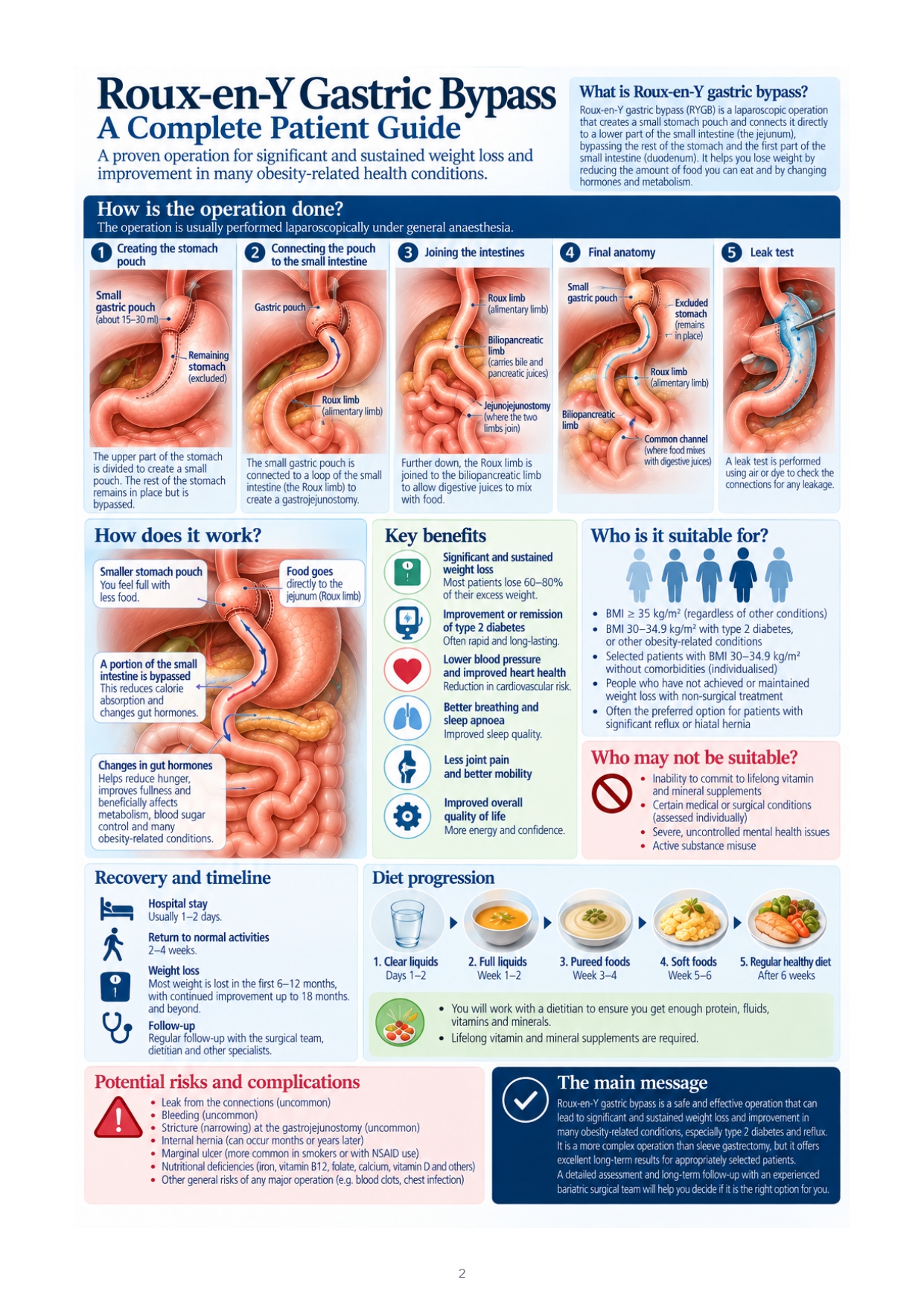
Roux-en-Y gastric bypass (RYGB) is a powerful metabolic operation that creates a small gastric pouch and reroutes
part of the small intestine. It reduces meal capacity and changes gut-hormone and metabolic signalling. It is
particularly useful when obesity is accompanied by significant gastro-oesophageal reflux.
The operation creates two new gastrointestinal connections and changes the route by which food meets bile and
pancreatic secretions. Understanding that anatomy helps patients understand both its benefits and its specific
long-term risks.
How is a Roux-en-Y gastric bypass constructed?
The upper stomach is divided to create a small gastric pouch. The remainder of the stomach stays in the body but is
excluded from the food stream. The jejunum is divided and the Roux or alimentary limb is connected to the pouch,
creating a gastrojejunostomy.
What happens to the other end of the intestine?
The biliopancreatic limb continues to carry bile and pancreatic secretions from the duodenum. Further downstream it
is joined to the Roux limb at the jejunojejunostomy. Beyond this point, food and digestive secretions travel together
through the common channel.
How does bypass produce weight loss?
The small pouch limits meal volume, but the operation also changes nutrient delivery through the intestine and alters
appetite, satiety and glucose-regulating hormones. These physiological effects are an important reason why bypass
can have powerful metabolic benefits.
Why is bypass particularly useful for reflux?
The small pouch produces relatively little acid and bile is diverted away from the oesophagus. For patients with
significant established reflux, this is a major reason I generally favour Roux-en-Y gastric bypass rather than sleeve
gastrectomy.
What if a hiatal hernia is present?
I assess the hiatus and repair a hiatal hernia when present. Correcting the hiatal defect addresses an important
anatomical contributor to reflux.
Why are there two anastomoses?
The gastrojejunostomy connects the gastric pouch to the Roux limb. The jejunojejunostomy reconnects the
biliopancreatic limb so bile and pancreatic enzymes can mix with food further downstream.
What are mesenteric defects?
Rearranging the small bowel creates potential spaces through which bowel can later pass. The clinically important
areas include the jejunojejunostomy mesenteric defect and Petersen's space behind the Roux limb.
Why I close all mesenteric defects
I routinely close all mesenteric defects created during gastric bypass to reduce internal-hernia risk. Closure reduces
the risk but does not eliminate it, so new or recurrent unexplained abdominal pain after bypass deserves proper
assessment even years later.
Why I perform an intraoperative leak test
Once the reconstruction is complete, I routinely perform a leak test to assess the new upper gastrointestinal
connection. A satisfactory test is reassuring but cannot exclude every delayed leak.
Important early complications
Potential early complications include bleeding, anastomotic leak, infection, venous thromboembolism, bowel
obstruction and dehydration. Persistent tachycardia, fever, worsening abdominal pain, breathlessness or inability to
drink requires urgent assessment.
What is an internal hernia?
Small bowel can move through a mesenteric space created by the bypass. Symptoms may be intermittent. Severe
or recurrent unexplained abdominal pain after RYGB should therefore be taken seriously.
What is a marginal ulcer?
A marginal ulcer forms near the gastrojejunostomy. Smoking and NSAID use are important risk factors. Symptoms
can include upper abdominal pain, nausea, bleeding or anaemia and may require endoscopy.
What is dumping syndrome?
Rapid delivery of carbohydrate-rich food into the small intestine can cause cramping, diarrhoea, flushing,
palpitations, dizziness or weakness. Dietary modification is the main preventive strategy.
Why nutritional follow-up is especially important
Bypass alters absorption of iron, calcium and other nutrients in addition to reducing food intake. Lifelong vitamin and
mineral supplementation and periodic blood testing are therefore essential.
Which deficiencies are important?
Iron, vitamin B12, folate, vitamin D and calcium require particular attention. Thiamine deficiency can develop rapidly
with prolonged vomiting and can cause serious neurological complications.
The postoperative diet
Patients progress from liquids through softer textures toward a healthy protein-focused diet under dietetic guidance.
Hydration and protein are prioritised.
Preventing blood clots
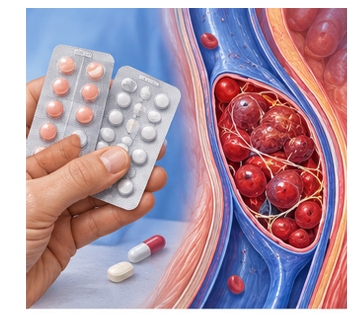
Early mobilisation is important. In my routine pathway, anticoagulant DVT prophylaxis continues for two weeks after
surgery unless individual risk requires a different plan.
PPI therapy after bypass
I routinely prescribe a proton-pump inhibitor during postoperative healing to reduce acid exposure at the
gastrojejunostomy. Duration is individualised.
Gallstones during rapid weight loss
Rapid weight loss increases gallstone risk. I offer ursodeoxycholic acid (UDCA/ursodiol) when appropriate during
the rapid weight-loss phase.
How much weight will I lose?
There is no guaranteed individual number. Outcomes depend on starting weight, metabolic biology, medications,
nutrition, activity and long-term follow-up. Health improvement is as important as the number on the scale.
Can diabetes improve after bypass?
Yes. RYGB can produce substantial improvement in type 2 diabetes and other obesity-related metabolic disease.
Some patients achieve remission, but no individual patient should be promised a cure.
What about NSAIDs and smoking?
Both are particularly important after bypass because they increase marginal-ulcer risk. Patients should discuss
alternative analgesia and smoking cessation with their clinical team.
Why lifelong follow-up matters
Late problems—including nutritional deficiencies, internal hernia, marginal ulcer, gallstones and weight regain—can
arise long after the initial recovery.
My approach to Roux-en-Y gastric bypass
I particularly consider Roux-en-Y when significant reflux is present. If there is a hiatal hernia, I repair it.
During bypass I routinely close all mesenteric defects and perform an intraoperative leak test. My pathway
also includes preoperative dietitian assessment, a full metabolic screen, a low-calorie high-protein
liver-reduction diet, postoperative PPI therapy, two weeks of DVT prophylaxis and UDCA during rapid
weight loss when appropriate.
Frequently Asked Questions
Is the excluded stomach removed?
No. It remains in the abdomen but food no longer passes through it.
Is bypass reversible?
It can sometimes be revised or reversed, but it should be regarded as a major long-term reconstruction.
Will I need vitamins for life?
Yes. Lifelong supplementation and blood monitoring are essential.
Does bypass guarantee that reflux disappears?
No operation guarantees complete symptom resolution, although RYGB is generally favourable for significant
GERD.
Can an internal hernia occur even if the defects are closed?
Yes. Closure reduces the risk but does not eliminate it.
Can internal hernia happen years later?
Yes. A history of gastric bypass remains important whenever unexplained abdominal pain is assessed.
Can I take ibuprofen or similar anti-inflammatory drugs?
NSAIDs can increase marginal-ulcer risk after bypass. Discuss analgesic choices with your treating team.
Will I experience dumping syndrome?
Not everyone does. It is more likely after rapidly absorbed sugary foods and can often be controlled by dietary
changes.
Can I regain weight after bypass?
Yes. Significant regain should be assessed for nutritional, behavioural, metabolic, medication-related and
anatomical causes.
Why is follow-up lifelong?
Because nutritional deficiencies and some surgical complications can appear long after the operation.
The key message
Roux-en-Y gastric bypass is a highly effective metabolic operation with particular advantages for patients
with significant reflux. Good long-term results depend on careful reconstruction, closure of mesenteric
defects, leak testing, thrombosis prevention and lifelong nutritional surveillance.
Patient-information note: operative details, medication regimens and follow-up are individualised. This article is educational and does not replace
personal assessment by your bariatric surgical and dietetic team.
Dr. Mohammed Alassaf
Consultant Bariatric & Gastrointestinal Surgeon
Dr. Alassaf is a leading expert in minimally invasive and bariatric surgery,
with extensive experience helping patients overcome obesity and related conditions.
Having completed advanced training in Australia and the Middle East, he is known
for his compassionate approach and evidence-based surgical care.