After Thyroid Surgery: Recovery, Voice, Calcium and Warning Signs
Thyroid Surgery & Postoperative Recovery
After Thyroid Surgery: Recovery, Voice, Calcium and Warning Signs
Dr-Alassaf
Nov 03, 2026
Most patients recover quickly after thyroid surgery, but the first days are also the period when a few important
complications can appear. Knowing what is normal - and what requires urgent attention - makes recovery safer and less
stressful.
What should I expect immediately after surgery?
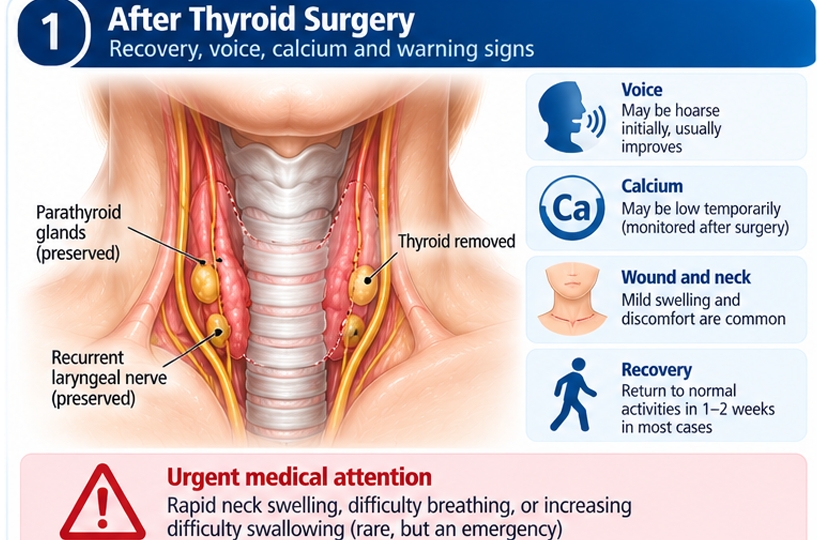
You will wake with a small neck incision and usually mild-to-moderate soreness, throat irritation from the breathing tube
and a feeling of neck tightness. Eating and drinking generally restart early. A drain is not routinely required in every
thyroid operation.
How painful is thyroid surgery?
Pain is usually manageable with simple or prescribed analgesia. Throat discomfort and stiffness can be more noticeable
than the skin incision itself. Symptoms should progressively improve rather than worsen.
What happens to my voice?
Temporary hoarseness is fairly common after surgery and can result from the breathing tube, swelling or nerve irritation.
The recurrent laryngeal nerves lie immediately behind the thyroid and control vocal-cord movement, so persistent or
marked voice change deserves assessment.
Why is calcium monitored after total thyroidectomy?
The parathyroid glands regulate calcium and sit close to the thyroid. Their function can temporarily decrease after total
thyroidectomy, causing tingling around the mouth or fingers, numbness or muscle cramps. Calcium and sometimes
active vitamin D are given when needed.
Is low calcium permanent?
Most postoperative hypocalcaemia is temporary. Permanent hypoparathyroidism is much less common, but it requires
long-term calcium and active vitamin-D management.
What is the most urgent complication?
A rapidly expanding neck haematoma is uncommon but can compress the airway. Rapid neck swelling, pressure,
difficulty breathing or rapidly increasing difficulty swallowing requires immediate emergency assessment.
How should I look after the wound?
Follow the dressing and showering instructions given by your surgical team. Mild swelling and bruising are expected.
Increasing redness, pus, fever or wound separation should be reported.
When can I return to normal activity?
Walking starts immediately. Many patients return to ordinary daily activities within one to two weeks, although energy
levels vary. More strenuous activity should be increased gradually according to recovery and your surgeon's advice.
When is thyroid hormone started?
After total thyroidectomy, lifelong levothyroxine is required and is usually started soon after surgery. After lobectomy, the
remaining lobe may provide enough hormone; thyroid function is checked later to determine whether replacement is
needed.
When do I receive the pathology result?
The removed thyroid tissue is examined microscopically. Final pathology confirms the diagnosis and, for cancer,
provides features that determine whether any additional surgery, radioactive iodine or surveillance is appropriate.
Frequently Asked Questions
Is neck numbness normal?
Some altered sensation around the incision can occur and usually improves.
Should every voice change be investigated?
Brief mild hoarseness can settle, but persistent, significant or professionally important voice change should be
assessed.
When should I seek urgent help?
Rapid neck swelling, breathing difficulty, rapidly worsening swallowing difficulty or severe symptoms of low calcium need
urgent medical attention.
The key message
Most thyroid-surgery recovery is straightforward. The two issues patients should recognise early are
symptoms of low calcium after bilateral thyroid surgery and, most importantly, rapidly increasing neck swelling
or breathing difficulty, which is an emergency.
This article is for general patient education and does not replace individual endocrine, imaging or surgical assessment.
Dr. Mohammed Alassaf
Consultant Bariatric & Gastrointestinal Surgeon
Dr. Alassaf is a leading expert in minimally invasive and bariatric surgery,
with extensive experience helping patients overcome obesity and related conditions.
Having completed advanced training in Australia and the Middle East, he is known
for his compassionate approach and evidence-based surgical care.