Recovery After Bariatric Surgery: The First Six Weeks
Obesity & Weight Management
Recovery After Bariatric Surgery: The First Six Weeks
Dr-Alassaf
Nov 02, 2026
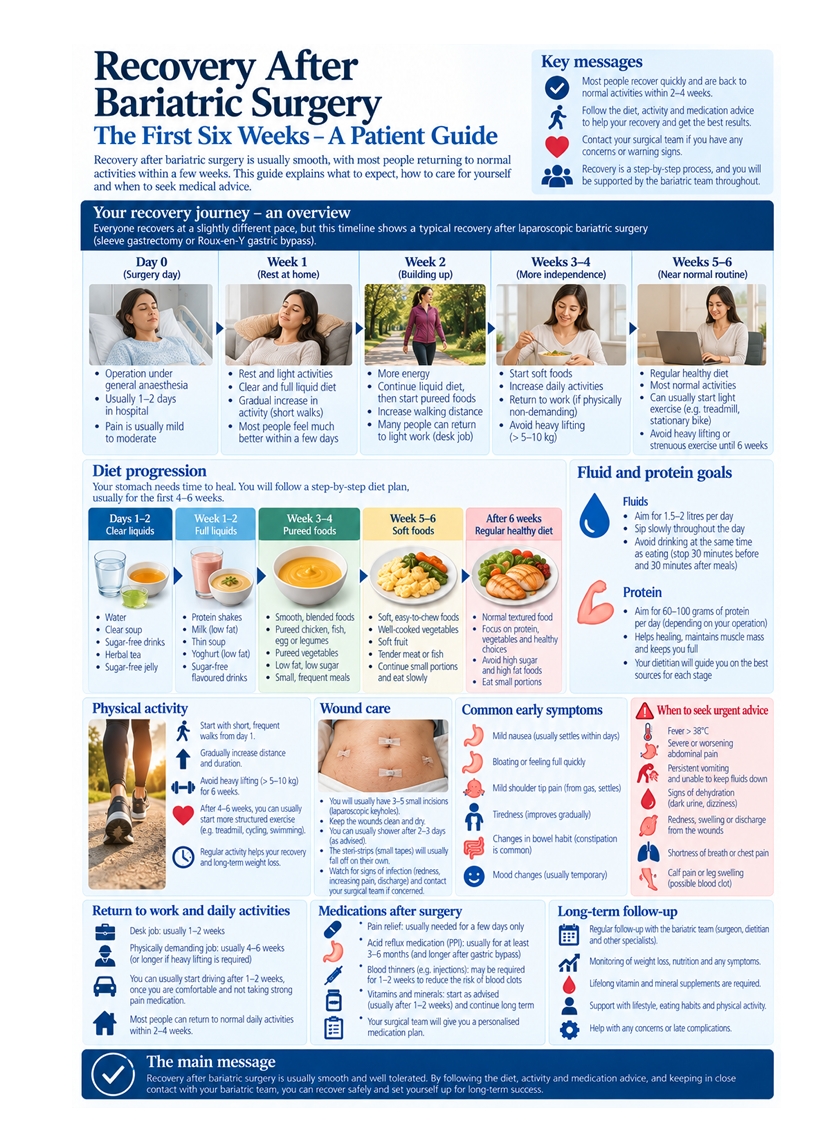
The first six weeks after bariatric surgery are a period of healing, rapid physiological change and adaptation to a new
way of eating. Most patients recover progressively after laparoscopic surgery, but recovery is not a race. Hydration,
protein intake, mobilisation and recognition of warning symptoms are more important than trying to return to normal
too quickly.
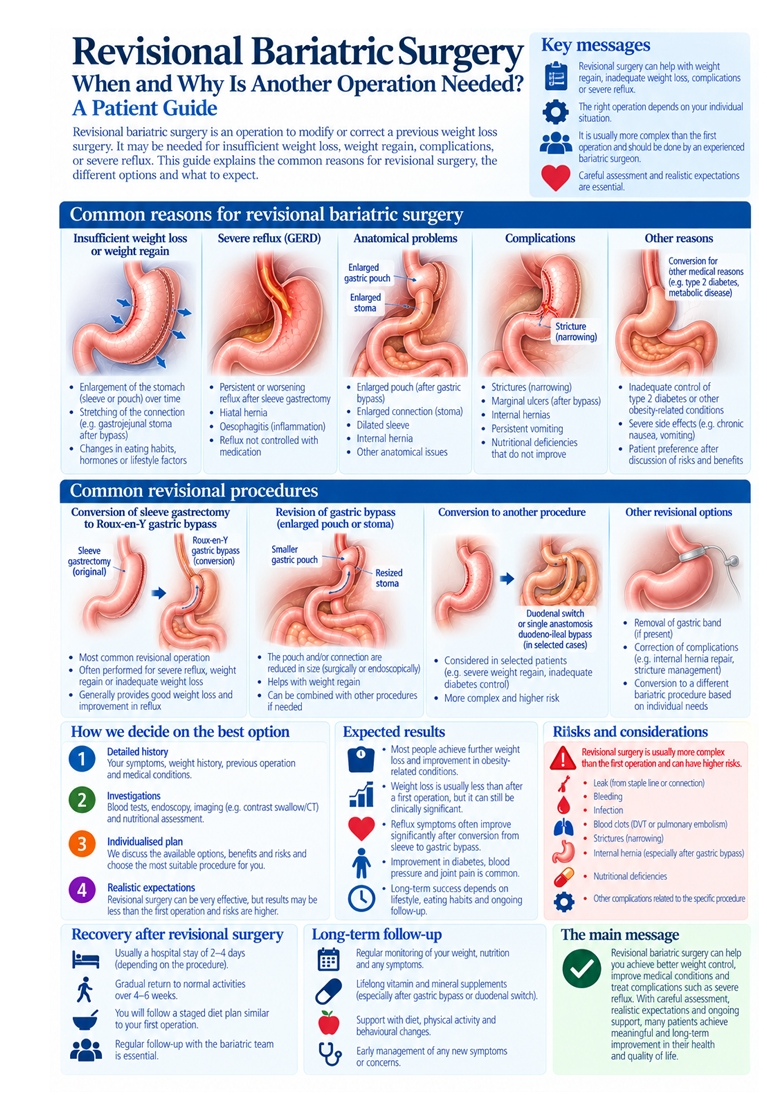
The exact pace differs between patients and between sleeve gastrectomy, Roux-en-Y gastric bypass and revisional
surgery. Your individual discharge instructions always take priority.
The first hours after surgery
Once you are awake and stable, the focus shifts quickly toward safe mobilisation, pain and nausea control,
respiratory exercises and oral fluids according to the surgical pathway. Getting out of bed and walking early is an
important part of preventing complications.
Hydration is the first nutritional priority
Your new gastric capacity is small and you cannot compensate for poor intake by drinking a large volume at once.
Frequent small sips throughout the day are therefore essential. Dark urine, dizziness, dry mouth and reduced urine
output can indicate dehydration.
Protein becomes increasingly important
As oral intake progresses, protein is prioritised to support healing and preservation of lean body mass. The dietitian
helps patients identify suitable protein sources at each stage of the postoperative diet.
Recovery is gradual
It is normal to have some fatigue, abdominal discomfort, altered bowel habits and reduced energy initially. What
matters is the overall direction: symptoms should gradually improve rather than progressively worsen
Diet progression after surgery
Diet is advanced in stages so that the new stomach and any anastomoses can heal while patients learn new eating
patterns. The exact schedule varies by programme and operation, so follow the dietitian's plan rather than
advancing food simply because you feel well.
How to eat when solid food returns
Eat slowly, chew thoroughly and stop at the first sign of fullness or pressure. Small portions are essential. Eating
quickly or continuing beyond satiety can produce pain, regurgitation or vomiting.
Avoid dehydration
Carry water or an appropriate fluid with you and sip regularly. Repeated vomiting, diarrhoea or inability to drink can
rapidly cause dehydration and should prompt contact with the bariatric team.
Walking and physical activity
Short, frequent walks begin early and gradually increase in distance and duration. Walking supports recovery, bowel
function and thrombosis prevention. More strenuous exercise is introduced later according to healing and individual
fitness.
Wound care
Laparoscopic incisions are small but still require observation. Keep them clean according to your discharge
instructions. Increasing redness, warmth, swelling, pus, wound separation or fever should be reported.
Pain after bariatric surgery
Mild to moderate abdominal soreness and some shoulder-tip discomfort from laparoscopic gas can occur early and
should improve. New severe pain or pain that is getting worse rather than better is different and requires
assessment.
Nausea and vomiting
Mild nausea can occur, but repeated vomiting is not normal. It can reflect dehydration, eating too quickly, stenosis,
obstruction or another complication. Prolonged vomiting also creates a risk of thiamine deficiency.
Bowel changes
Constipation is common because food volume, fluid intake, activity and medications all change. Some patients also
notice altered stool consistency. Severe distension, persistent vomiting or inability to pass gas deserves
assessment.
PPI therapy
I routinely prescribe a proton-pump inhibitor after bariatric surgery to reduce acid exposure during the healing
period. The duration is individualised according to the operation, symptoms and risk factors.
DVT prevention for two weeks
Obesity and abdominal surgery increase the risk of venous thromboembolism. Early walking is essential, and in my
routine pathway patients continue anticoagulant DVT prophylaxis for two weeks after surgery unless there is a
clinical reason to modify it.
Warning signs of a blood clot
New one-sided calf or leg swelling or pain can indicate DVT. Sudden breathlessness, chest pain, coughing blood,
fainting or collapse can indicate pulmonary embolism and requires emergency assessment.
Warning signs of a leak or serious abdominal complication
Persistent rapid heart rate, fever, increasing abdominal or shoulder pain, breathlessness, repeated vomiting or a
general feeling of becoming progressively unwell should never simply be watched at home.
Returning to work
Return to work depends on the operation, recovery and the physical demands of the job. Desk-based work is usually
possible sooner than heavy manual work. Fatigue can persist even when wounds look healed.
Driving
Do not drive while taking sedating pain medication or until you can sit comfortably, concentrate normally and
perform an emergency stop without hesitation. Insurance and local driving requirements should also be followed.
Exercise
Walking begins early. More structured cardiovascular and resistance exercise is introduced progressively once
healing is satisfactory. Exercise supports cardiovascular fitness, preservation of muscle and long-term weight
management.
Gallstone prevention
Rapid weight loss increases the risk of cholesterol gallstones. I offer ursodeoxycholic acid (UDCA/ursodiol) during
the rapid weight-loss phase when appropriate to reduce gallstone formation.
Vitamins and supplements
Supplements are introduced according to the procedure and dietetic plan. Long-term blood monitoring is important
even when patients feel completely well, because deficiencies may develop before symptoms appear.
Follow-up visits
Early review focuses on hydration, wounds, diet tolerance and complications. Later visits assess weight trajectory,
metabolic disease, reflux, nutritional status and adaptation to eating.
The emotional side of recovery
Rapid changes in appetite, body weight and daily routine can be psychologically significant. Mood can fluctuate, and
support from the bariatric team, family and appropriate mental-health professionals can be valuable.
What happens after six weeks?
By this stage many patients are moving toward a more normal routine, but bariatric care does not end. Nutrition,
supplements, physical activity, metabolic follow-up and recognition of late complications remain lifelong.
My postoperative pathway
My routine postoperative plan includes early mobilisation, staged dietetic progression, PPI therapy and
anticoagulant DVT prophylaxis for two weeks after surgery. I also offer UDCA during rapid weight loss when
appropriate. Patients are taught to prioritise hydration and protein and to seek urgent assessment for
persistent tachycardia, fever, worsening pain, breathlessness, repeated vomiting or inability to drink.
Frequently Asked Questions
How much should I drink?
Your bariatric team will set an individual target. The practical priority is frequent intake throughout the day and
avoiding signs of dehydration.
Is it normal to feel tired?
Some fatigue is common early on. Severe, worsening or prolonged weakness deserves assessment.
Can I stop the blood-thinning injections if I am walking well?
Not without advice. In my routine pathway they continue for two weeks.
What if I vomit once?
An isolated episode may occur, especially if you drink or eat too quickly. Repeated vomiting is not normal.
When can I drive?
When you are no longer impaired by pain or medication and can safely perform an emergency stop, subject to local
and insurance requirements.
When can I return to work?
It depends on the operation and job demands. Desk work usually allows an earlier return than physically demanding
work.
When can I exercise?
Walking begins immediately and increases progressively. More strenuous exercise is added when healing and your
surgical team allow.
Is constipation normal?
It is common, but severe abdominal distension, persistent pain or vomiting should not be attributed to constipation
without assessment.
When should I contact the surgical team urgently?
Persistent rapid pulse, fever, worsening abdominal or shoulder pain, breathlessness, chest pain, repeated vomiting,
inability to hydrate, fainting or significant leg swelling require urgent medical attention.
Do I still need follow-up once I feel normal?
Yes. Nutritional and metabolic surveillance continues long term.
The key message
The first six weeks are about safe healing rather than rapid return to normal. Prioritise hydration, protein,
walking, medication and diet progression, and know the warning symptoms that require urgent
assessment. Recovery is temporary; nutritional and metabolic follow-up is lifelong.
Patient-information note: diet stages, activity, medication and return-to-work advice must be individualised. Follow the specific instructions provided by your own bariatric team.
Dr. Mohammed Alassaf
Consultant Bariatric & Gastrointestinal Surgeon
Dr. Alassaf is a leading expert in minimally invasive and bariatric surgery,
with extensive experience helping patients overcome obesity and related conditions.
Having completed advanced training in Australia and the Middle East, he is known
for his compassionate approach and evidence-based surgical care.