Acute Gastrointestinal Bleeding: When Is Emergency Surgery Necessary?
Gastrointestinal Bleeding & Emergency Management
Acute Gastrointestinal Bleeding: When Is Emergency Surgery Necessary?
Dr-Alassaf
Nov 02, 2026
Gastrointestinal (GI) bleeding means blood loss from somewhere in the digestive tract. It may appear as vomiting
blood, black tar-like stools, or red blood passed from the rectum. Some bleeding is minor, but a major bleed can
cause shock and requires emergency hospital treatment.
Most GI bleeding is treated without an operation. Emergency surgery is usually reserved for bleeding that cannot
be controlled with resuscitation, endoscopy or interventional radiology, or when another surgical emergency is
present.
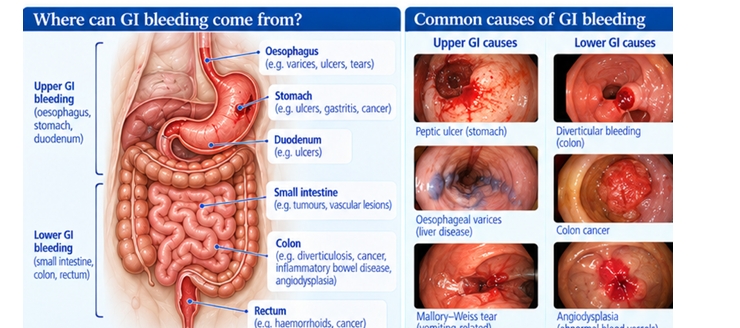
Bleeding from the oesophagus, stomach or duodenum is called upper GI bleeding. Causes include peptic ulcers,
oesophageal or gastric varices, inflammation and tears after vomiting. Bleeding from the small bowel, colon or
rectum is generally considered lower GI bleeding; common causes include diverticular bleeding, vascular
abnormalities, colitis and colorectal lesions.
The colour of blood offers clues, but it does not always identify the source: brisk upper GI bleeding can also
produce red blood from the rectum.
What symptoms need immediate attention?
Vomiting fresh blood or material resembling coffee grounds, passing black tar-like stools, passing a large amount
of red or maroon blood, fainting, confusion, severe weakness, breathlessness or a rapid heartbeat all warrant
urgent assessment. Heavy bleeding may produce low blood pressure and shock.
What happens first in hospital?
The immediate priority is to assess circulation and stabilise the patient. The team checks vital signs, obtains
intravenous access, takes blood for haemoglobin and clotting tests, and arranges blood transfusion when
indicated. Medicines such as anticoagulants are reviewed and reversed when clinically appropriate.
How is the source found?
Upper GI endoscopy examines the oesophagus, stomach and duodenum and can often treat bleeding during the
same procedure. Colonoscopy may be used in selected lower GI bleeds once the patient is stable and the bowel is
prepared. In ongoing significant lower GI bleeding, CT angiography can help locate active blood loss and guide
treatment.
Can endoscopy stop the bleeding?
Often, yes. Depending on the source, the endoscopist may use clips, thermal therapy, injection or other
haemostatic techniques. Bleeding varices require a different pathway, often involving band ligation and medication
that reduces portal pressure. Not every technique is appropriate for every lesion.
What is angiographic embolisation?
An interventional radiologist may pass a catheter into an artery and block the vessel supplying the bleeding site.
Embolisation can be particularly useful when active bleeding has been localised and endoscopic control is
unsuccessful or impractical. It also carries risks, including reduced blood supply to nearby tissue.
When does emergency surgery become necessary?
Surgery may be required when bleeding continues despite appropriate endoscopic and radiological treatment,
when the patient remains unstable and the source can be surgically addressed, or when bleeding accompanies
perforation, bowel ischaemia or another condition requiring an operation. The decision is individualised and
involves the emergency, gastroenterology, anaesthetic and radiology teams.
What operation might be performed?
The operation depends entirely on the source. For an uncontrolled bleeding ulcer, surgery may involve direct
control of the bleeding vessel and treatment of the ulcer-related defect. For severe localised colonic bleeding,
removal of the affected bowel segment may be needed. Surgeons try to identify the bleeding site accurately before
removing bowel.
Why is operating without knowing the source difficult?
Bleeding can stop and restart, and the bowel may contain blood far from the actual source. Removing the wrong
segment may fail to control the problem. This is why endoscopy, CT angiography and radiological localisation are
so valuable when the patient's condition allows.
What are the risks of emergency surgery?
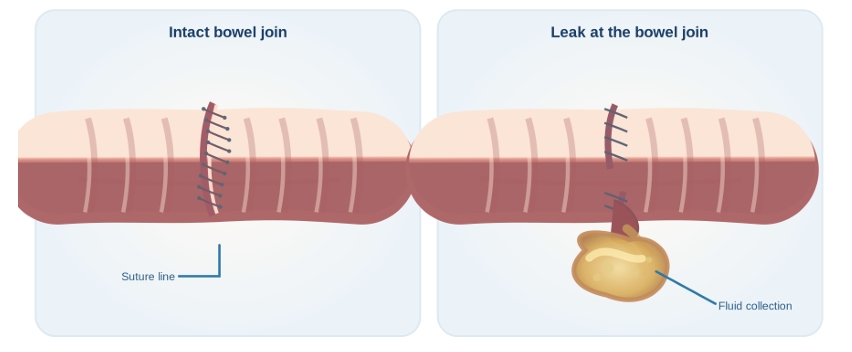
Risks include further bleeding, infection, injury to nearby organs, leakage from a bowel join, need for a stoma,
blood clots, heart or lung complications and the effects of severe blood loss. Risk is higher in patients who are
already unstable or have significant underlying illness.
What happens after the bleeding stops?
Monitoring continues for recurrent bleeding and anaemia. Treatment also addresses the underlying cause: for
example, testing for and treating Helicobacter pylori in peptic ulcer disease, reviewing NSAID use, managing liver
disease in variceal bleeding, or investigating a colorectal lesion.
Will I need a blood transfusion?
Not always. Transfusion depends on the degree of bleeding, haemoglobin level, symptoms, ongoing blood loss
and other medical conditions. The team balances the benefits of transfusion against its risks.
How long is recovery?
Recovery depends on the severity of blood loss and whether treatment was endoscopic, radiological or surgical. A
patient treated successfully by endoscopy may recover more quickly than someone who needs bowel resection or
intensive care. Iron replacement and follow-up blood tests may be needed.
Can bleeding happen again?
Yes. Recurrence depends on the underlying cause and whether it has been treated. Follow-up is important even
after bleeding has apparently stopped.
Frequently Asked Questions
Does black stool always mean bleeding?
No. Iron tablets and some foods or medicines can darken stool, but new black tar-like stool should be medically
assessed.
Is bright red bleeding always from haemorrhoids?
No. Haemorrhoids are one possible cause, but diverticular bleeding, colitis and colorectal disease can also cause
red blood.
Will everyone need a colonoscopy?
No. The investigation depends on whether bleeding is upper or lower, its severity and the patient's stability.
Can I take aspirin or blood thinners again?
Restarting them depends on why they were prescribed and the balance between bleeding and clotting risks. Never
stop or restart them without a clinician's plan.
Is surgery the usual treatment?
No. Most patients are managed with resuscitation and targeted endoscopic, medical or radiological treatment;
surgery is reserved for selected cases.
The key message
Severe GI bleeding is a medical emergency, but an operation is not always necessary. The first priorities
are stabilising the patient, identifying the source and controlling the bleeding by the safest effective
method. Emergency surgery is important when these approaches fail or another surgical problem is
present.
This article provides general patient education and does not replace urgent assessment. Call emergency services for heavy bleeding,
fainting, chest pain, severe weakness or signs of shock.
Dr. Mohammed Alassaf
Consultant Bariatric & Gastrointestinal Surgeon
Dr. Alassaf is a leading expert in minimally invasive and bariatric surgery,
with extensive experience helping patients overcome obesity and related conditions.
Having completed advanced training in Australia and the Middle East, he is known
for his compassionate approach and evidence-based surgical care.