Sleeve gastrectomy can cause new reflux or worsen existing reflux in some patients. For this reason I assess reflux
symptoms carefully before recommending the operation. Significant established reflux may make Roux-en-Y gastric
bypass a more appropriate choice.
What if I have a hiatal hernia?
The oesophageal hiatus is assessed during surgery. If a hiatal hernia is present, I repair it rather than leaving the
anatomical defect untreated. Repairing the hiatus can address an important contributor to reflux, although it cannot
guarantee that reflux will never occur after sleeve.
How is the sleeve created safely?
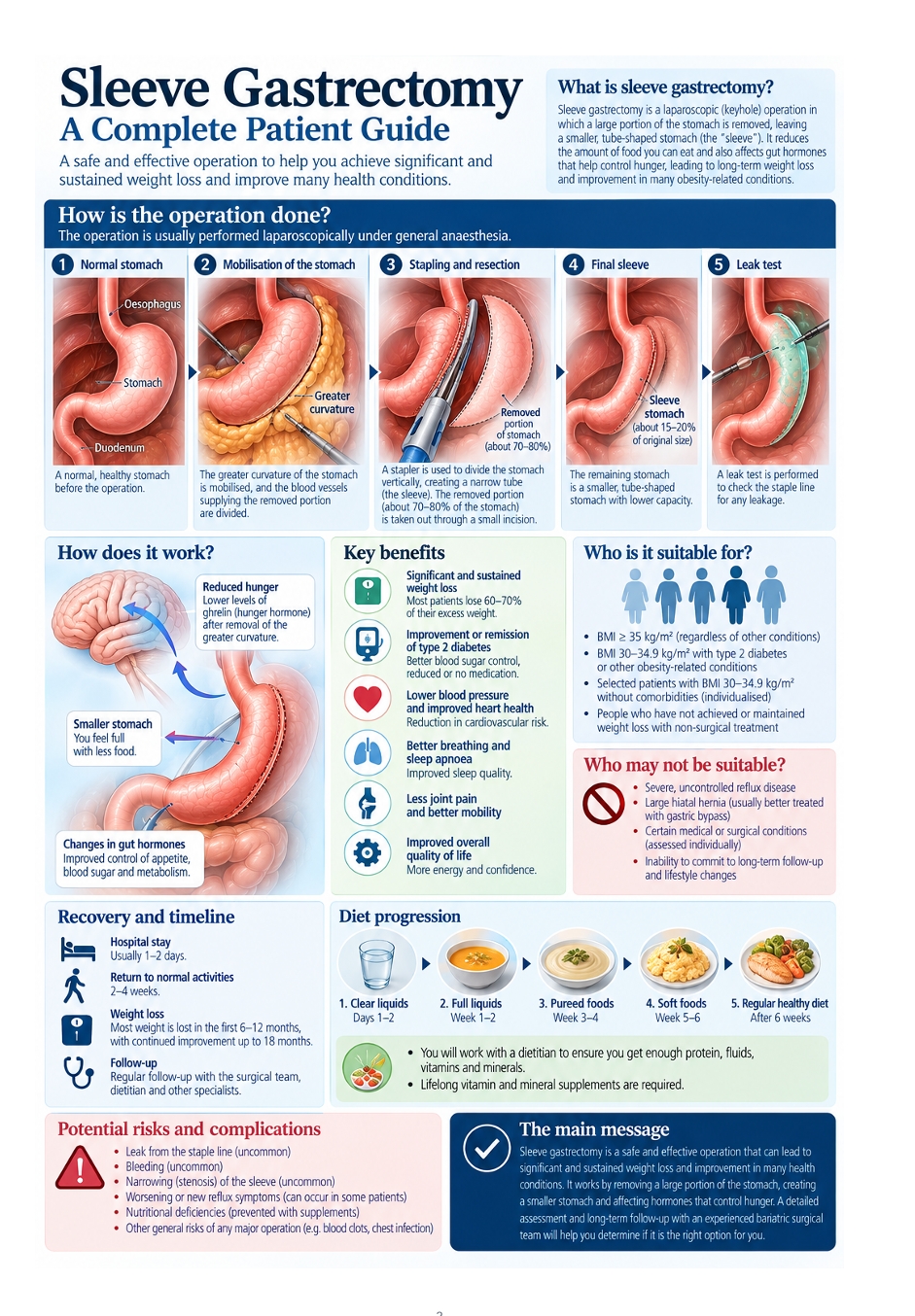
The aim is to create a smooth gastric tube without excessive narrowing or twisting while preserving the pylorus.
Staple-line formation requires attention to tissue thickness, the angle of each firing and the anatomy around the
incisura and gastro-oesophageal junction.
Why I perform a leak test
After the sleeve is completed, I routinely perform an intraoperative leak test to assess the integrity of the new gastric
staple line. A satisfactory test is reassuring but cannot reduce the risk of a later leak to zero, which is why
postoperative warning symptoms remain important.
What are the important early risks?
The major early complications include staple-line leak, bleeding, venous thromboembolism, infection, dehydration
and difficulty tolerating oral intake. These complications are uncommon, but they can be serious.
What symptoms after surgery require urgent assessment?
Persistent rapid heart rate, fever, worsening abdominal or left-shoulder pain, breathlessness, chest pain, repeated
vomiting, inability to drink or a general feeling of becoming progressively more unwell should prompt urgent medical
assessment.
Can the sleeve become too narrow?
Yes. Stenosis, angulation or twisting can interfere with gastric emptying and cause persistent vomiting, reflux or
inability to progress with diet. Endoscopy and contrast imaging can help define the problem, and treatment may be
endoscopic or surgical depending on the cause.
What are the longer-term issues?
Long-term problems can include reflux, nutritional deficiencies, gallstones during rapid weight loss and weight
regain. A small proportion of patients ultimately require revisional surgery.
What is the diet after surgery?
Oral intake progresses through a structured staged diet. Patients begin with liquids and gradually advance through
softer textures toward a healthy protein-focused diet. The exact timetable is individualised by the bariatric team
rather than determined by the operation alone.
Why protein and hydration matter
Because gastric capacity is small, every mouthful becomes more important. Protein supports healing and
preservation of lean body mass. Frequent small sips of fluid reduce dehydration risk. High-calorie liquids can bypass
the intended satiety effect and undermine weight loss.
Will I need vitamins?
Yes. Sleeve does not bypass the intestine, but reduced intake and pre-existing deficiencies can still lead to iron,
vitamin B12, folate, vitamin D and other deficiencies. Long-term supplementation and blood monitoring remain
important.
Preventing blood clots
Obesity and abdominal surgery increase the risk of DVT and pulmonary embolism. Early mobilisation is essential. In
my routine pathway, patients continue anticoagulant DVT prophylaxis for two weeks after surgery unless their
individual clinical situation requires a different plan.
Why I prescribe a PPI
I routinely prescribe proton-pump inhibitor therapy after surgery to reduce acid exposure during the healing period.
Duration is adjusted according to symptoms and individual risk.
Gallstones during rapid weight loss
Rapid weight loss increases the risk of gallstone formation. I offer ursodeoxycholic acid (UDCA/ursodiol) after
weight-loss surgery when appropriate to reduce the chance of forming cholesterol gallstones during the rapid
weight-loss phase.
How much weight will I lose?
There is no single guaranteed percentage for an individual patient. Results depend on starting weight, metabolic
biology, eating pattern, activity, medications and long-term engagement with follow-up. The objective is durable
improvement in health as well as weight.
Can sleeve improve diabetes and other conditions?
Yes. Significant weight loss and metabolic changes can improve type 2 diabetes, high blood pressure, sleep
apnoea, fatty liver disease, mobility and other obesity-related conditions. The degree of improvement varies.
Can weight return?
Some increase from the lowest postoperative weight can occur. Significant regain deserves structured assessment
for dietary, behavioural, metabolic, medication-related and anatomical causes rather than simply being labelled as
patient failure.
Can sleeve be converted to another operation?
Yes. Conversion to Roux-en-Y gastric bypass is an established revisional option in selected patients, particularly
when severe reflux persists despite appropriate medical treatment or when another anatomical or metabolic
indication exists.
Why long-term follow-up is essential
Bariatric surgery is a lifelong treatment pathway. Follow-up monitors weight trajectory, reflux, nutrition, vitamin levels
and late complications. Problems are usually easier to manage when recognised early.
My approach to sleeve gastrectomy
I select sleeve carefully rather than regarding it as the default bariatric operation. Significant reflux
generally pushes my recommendation toward Roux-en-Y gastric bypass. If a hiatal hernia is present, I
repair it. I routinely perform a leak test, use a preoperative low-calorie high-protein liver-reduction diet,
involve a dietitian before surgery, obtain a full metabolic screen, prescribe postoperative PPI therapy
and two weeks of DVT prophylaxis, and offer UDCA during rapid weight loss when appropriate.
Frequently Asked Questions
Is sleeve gastrectomy reversible?
No. A large portion of the stomach is permanently removed.
Does the intestine get bypassed?
No. Food continues through the normal intestinal pathway.
Will I always feel less hungry?
Many patients experience a major reduction in hunger, particularly early after surgery, but appetite can change over
time.
Can sleeve cause reflux even if I never had it before?
Yes. New reflux can develop after sleeve.
Does repairing a hiatal hernia guarantee I will not get reflux?
No. It corrects an important anatomical problem but cannot eliminate every mechanism of reflux.
Can I drink normally after surgery?
You can drink, but initially you must take small frequent sips. Hydration is a major priority.
Will I need vitamin supplements?
Yes. Supplementation and periodic blood tests remain important after sleeve.
What happens if I vomit repeatedly?
Persistent vomiting is not normal. It can indicate stenosis, twisting, obstruction or another problem and can rapidly
cause dehydration and thiamine deficiency.
Can I have another bariatric operation later?
Yes, if there is a clear indication. Conversion to Roux-en-Y is commonly considered for difficult reflux and selected
other problems.
How long will I need follow-up?
Long term. Nutritional and metabolic surveillance should continue even when you feel completely well.
The key message
Sleeve gastrectomy is an effective metabolic operation when it is matched to the right patient. Careful
assessment of reflux and hiatal anatomy, meticulous sleeve construction, routine leak testing, thrombosis
prevention and lifelong nutritional follow-up are all part of achieving a safe and durable result.
Patient-information note: the exact operative technique, diet progression, medications and follow-up schedule are individualised. This article does
not replace personal assessment by your bariatric surgical and dietetic team.
Dr. Mohammed Alassaf
Consultant Bariatric & Gastrointestinal Surgeon
Dr. Alassaf is a leading expert in minimally invasive and bariatric surgery,
with extensive experience helping patients overcome obesity and related conditions.
Having completed advanced training in Australia and the Middle East, he is known
for his compassionate approach and evidence-based surgical care.