Acute Mesenteric Ischaemia: When the Bowel Loses Its Blood Supply
Dr-Alassaf
Nov 02, 2026
Acute mesenteric ischaemia occurs when blood flow to part of the intestine becomes critically reduced. Without
oxygen, bowel tissue can become irreversibly damaged. This is a time-sensitive emergency: early diagnosis and
rapid restoration of blood flow can save bowel and lives.
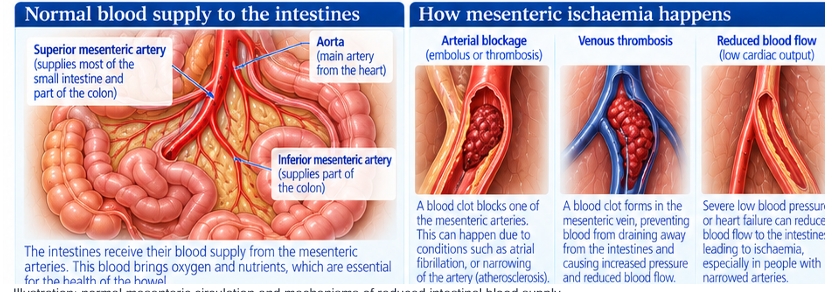
How does the bowel receive blood?
The superior mesenteric artery supplies most of the small bowel and part of the colon. Mesenteric veins drain
blood from the bowel. A sudden arterial blockage, venous clot or profound reduction in circulation can compromise
this system.
What causes acute mesenteric ischaemia?
An embolus may travel from the heart, particularly in atrial fibrillation, and block a mesenteric artery. An artery
narrowed by atherosclerosis may thrombose. A clot may form in the mesenteric veins. In severe shock or low-flow
states, blood supply can fall without a major arterial blockage (non-occlusive mesenteric ischaemia).
What symptoms should concern me?
Sudden severe abdominal pain, sometimes initially much worse than examination findings suggest, is a classic
warning. Nausea, vomiting, diarrhoea or abdominal bloating may occur. Bloody stool, persistent tenderness, fever,
confusion, low blood pressure or collapse can signal advanced disease. Symptoms are not always typical.
How is it diagnosed?
Urgent clinical assessment and CT angiography are central. CT angiography can identify vascular blockage,
impaired bowel perfusion and complications. Blood tests assess dehydration, organ function and severity; an
elevated lactate can support concern but a normal lactate does not rule out early ischaemia
Why is rapid treatment essential?
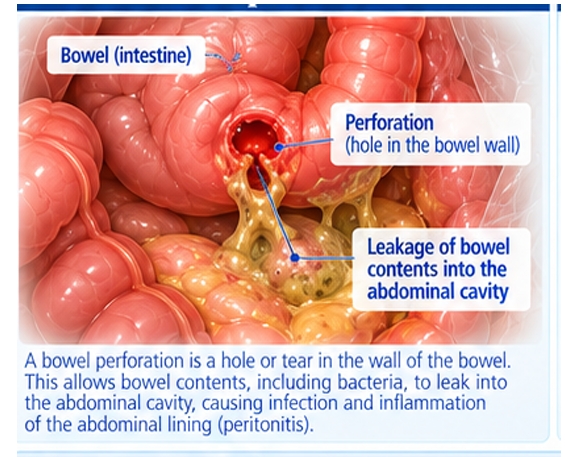
Prolonged loss of circulation can cause bowel infarction, perforation, peritonitis, sepsis and organ failure.
Resuscitation and definitive treatment should proceed urgently with surgical, vascular and critical-care expertise.
What happens first in hospital?
Treatment commonly begins with intravenous fluids, pain relief, correction of circulatory problems and careful
monitoring. Broad-spectrum antibiotics are often given when bowel injury is suspected. Intravenous
anticoagulation is used in many cases when appropriate, but treatment depends on the cause and bleeding risk.
Can blood flow be restored without open surgery?
In selected patients, vascular specialists may use catheter-based thrombectomy, thrombolysis or
angioplasty/stenting. Some patients need open surgical embolectomy or bypass. The safest choice depends on
anatomy, bowel viability, clinical stability and available expertise.
When is emergency abdominal surgery required?
Peritonitis, suspected dead bowel, perforation or clinical deterioration usually requires urgent exploration. The
surgeon assesses the entire bowel, restores blood flow where possible and removes segments that are irreversibly
damaged. If bowel viability remains uncertain, a planned second-look operation may be needed.
Will I need a stoma?
Not always. When bowel can be safely joined, an anastomosis may be possible. In unstable patients or when
bowel condition is uncertain, a temporary or sometimes permanent stoma may be safer.
What if the cause is mesenteric venous thrombosis?
If there is no peritonitis or infarcted bowel, anticoagulation and supportive care are often the main treatments.
Surgery is required if bowel necrosis or other major complications develop.
What is recovery like?
Recovery varies greatly. Some patients have a short bowel segment affected and recover after restoring blood
flow. Others require intensive care, multiple procedures or bowel resection. Extensive bowel loss may cause
short-bowel syndrome and require specialist nutritional support.
How can future episodes be prevented?
Prevention depends on the cause: treatment of atrial fibrillation, appropriate anticoagulation, vascular risk
reduction, smoking cessation and management of cardiovascular disease or clotting disorders. Follow-up is
essential.
Frequently asked questions
Can it happen without a clot?
Yes. Severe low blood flow can cause non-occlusive ischaemia.
Does a normal blood test exclude it?
No. Early disease can be missed without appropriate imaging.
Does everyone need bowel removal?
No. Early treatment may restore circulation before permanent injury.
Can it recur?
Yes, depending on the underlying vascular or clotting condition.
The key message
Sudden, severe or unexplained abdominal pain can be a sign of acute mesenteric ischaemia. This is an
emergency requiring immediate hospital assessment, usually including CT angiography. Rapid treatment
may preserve bowel and prevent life-threatening complications.
Educational information only. New severe abdominal pain, fainting, bloody stool or signs of shock require immediate emergency medical
assessment.
Dr. Mohammed Alassaf
Consultant Bariatric & Gastrointestinal Surgeon
Dr. Alassaf is a leading expert in minimally invasive and bariatric surgery,
with extensive experience helping patients overcome obesity and related conditions.
Having completed advanced training in Australia and the Middle East, he is known
for his compassionate approach and evidence-based surgical care.