Acute Pancreatitis: When Is Surgery or Intervention Necessary?
Acute Pancreatitis & Pancreatic Complications
Acute Pancreatitis: When Is Surgery or Intervention Necessary?
Dr-Alassaf
Nov 03, 2026
Acute pancreatitis is sudden inflammation of the pancreas. It can cause severe upper abdominal pain, vomiting and, in some patients, serious complications. Most people improve with medical treatment and do not need pancreatic surgery. A smaller group develops problems that require endoscopy, image-guided drainage or an operation.
What causes acute pancreatitis?
Gallstones and alcohol are common causes. Other causes include high triglycerides, certain medicines, high calcium levels and, occasionally, anatomical or genetic factors. Sometimes no clear cause is identified.
What symptoms should prompt medical attention?
Typical symptoms include persistent severe upper abdominal pain, often radiating to the back, nausea and vomiting. Fever, jaundice, rapid breathing, faintness or confusion may indicate a more serious illness and require urgent assessment.
How is the diagnosis made?
Diagnosis usually relies on a combination of characteristic pain, elevated pancreatic enzymes and imaging when needed. Ultrasound helps look for gallstones. CT is useful when the diagnosis is uncertain or complications are suspected; routine early CT is not necessary for every patient.
What is the usual initial treatment?
Care focuses on pain relief, appropriately guided intravenous fluids, early oral or enteral nutrition as tolerated, monitoring and treating the cause. Routine preventive antibiotics are not recommended for sterile pancreatic inflammation or necrosis. Severe cases may require intensive care.
Does gallstone pancreatitis require ERCP?
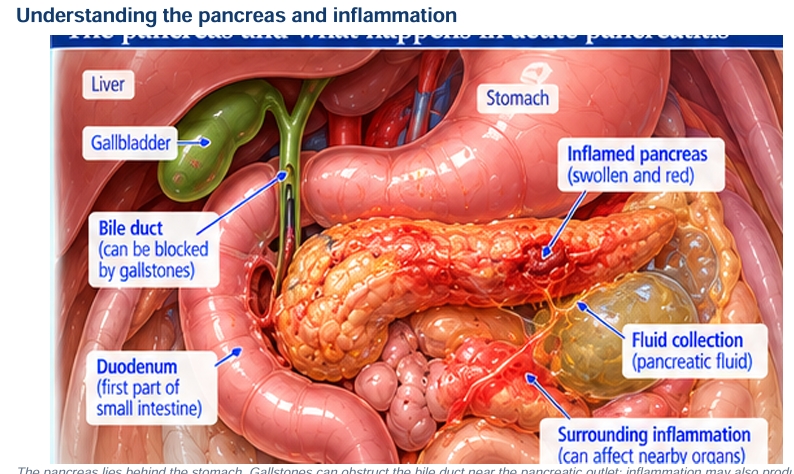
Not routinely. Urgent ERCP is generally indicated when gallstone pancreatitis is accompanied by cholangitis; it may also be appropriate for persistent biliary obstruction. ERCP can remove duct stones and relieve blockage but is not a treatment for pancreatic inflammation itself.
When should the gallbladder be removed?
After mild gallstone pancreatitis, laparoscopic cholecystectomy is usually recommended during the same hospital admission to reduce recurrence. In severe disease with substantial collections or ongoing inflammation, surgery is often deferred until the patient is stable and local complications have settled.
What are pancreatic fluid collections?
Fluid can accumulate around the pancreas after inflammation. Early collections may resolve without intervention. A mature, encapsulated collection may be called a pseudocyst or, if it contains necrotic material, walled-off necrosis. Imaging and the time course help distinguish these entities.
Does every collection need drainage?
No. Size alone is not a reason to drain a collection. Intervention is considered for infection, persistent pain, gastric or biliary obstruction, nutritional problems or other clinically important complications. Some asymptomatic collections are observed.
What is pancreatic necrosis?
In more severe pancreatitis, part of the pancreas or surrounding tissue may lose its blood supply and become nonviable. Necrosis may remain sterile or become infected. Sterile necrosis often does not require removal; infected necrosis may need antibiotics and drainage, with debridement if needed.
How is infected necrosis treated?
Where the patient is stable, intervention is generally delayed until the collection has matured, often about four weeks, because later procedures are usually safer. A step-up approach begins with endoscopic or percutaneous drainage and escalates to minimally invasive or surgical necrosectomy if the patient does not improve. Unstable patients may require earlier source control.
When is an operation necessary?
Operations are now less common than in the past. Surgery may be needed for infected necrosis not controlled by drainage, bowel ischaemia or perforation, abdominal compartment syndrome, uncontrolled bleeding after other measures, or another abdominal emergency. The timing and method depend on the complication and clinical condition.
Can bleeding complicate pancreatitis?
Yes. Inflammation can damage nearby arteries and produce a pseudoaneurysm or haemorrhage. CT angiography and catheter-based embolisation are often preferred when feasible; emergency surgery may be necessary if bleeding cannot be controlled.
How long does recovery take?
Mild pancreatitis may improve over days. Severe pancreatitis can require weeks or months of hospital care, nutritional support, rehabilitation and repeat procedures. Some patients develop diabetes or pancreatic enzyme deficiency and need long-term follow-up.
Can pancreatitis happen again?
Yes. Preventing recurrence means addressing the cause: removing the gallbladder after gallstone pancreatitis when appropriate, avoiding alcohol where implicated, managing triglycerides and reviewing relevant medications.
Frequently Asked Questions
Will I need antibiotics?
Only when infection is suspected or confirmed, or for another clear indication; antibiotics do not treat uncomplicated sterile pancreatitis.
Is pancreatic surgery always urgent?
No. Many pancreatic interventions are safer after inflammation settles and collections become well defined, unless an emergency complication demands earlier treatment.
Can drainage be done without an incision?
Often. Depending on the collection, specialists may use endoscopic ultrasound-guided drainage or a catheter placed through the skin.
Will my pancreas recover completely?
Many patients recover fully after mild disease. Severe disease can leave lasting digestive or blood-sugar problems.
The key message
Most acute pancreatitis is treated without surgery. Procedures are reserved for specific complications or persistent bile-duct obstruction. When intervention is necessary, a carefully timed, minimally invasive step-up approach is often preferred, with emergency surgery reserved for selected life-threatening problems.
This article is intended for general patient education and does not replace individual medical advice. Severe abdominal pain, persistent vomiting, jaundice, fainting or confusion warrants urgent medical assessment.
Dr. Mohammed Alassaf
Consultant Bariatric & Gastrointestinal Surgeon
Dr. Alassaf is a leading expert in minimally invasive and bariatric surgery,
with extensive experience helping patients overcome obesity and related conditions.
Having completed advanced training in Australia and the Middle East, he is known
for his compassionate approach and evidence-based surgical care.