Emergency Abdominal Surgery During Pregnancy: What Patients Should Know
Emergency Surgery During Pregnancy & Maternal-Fetal Care
Emergency Abdominal Surgery During Pregnancy: What Patients Should Know
Dr-Alassaf
Nov 03, 2026
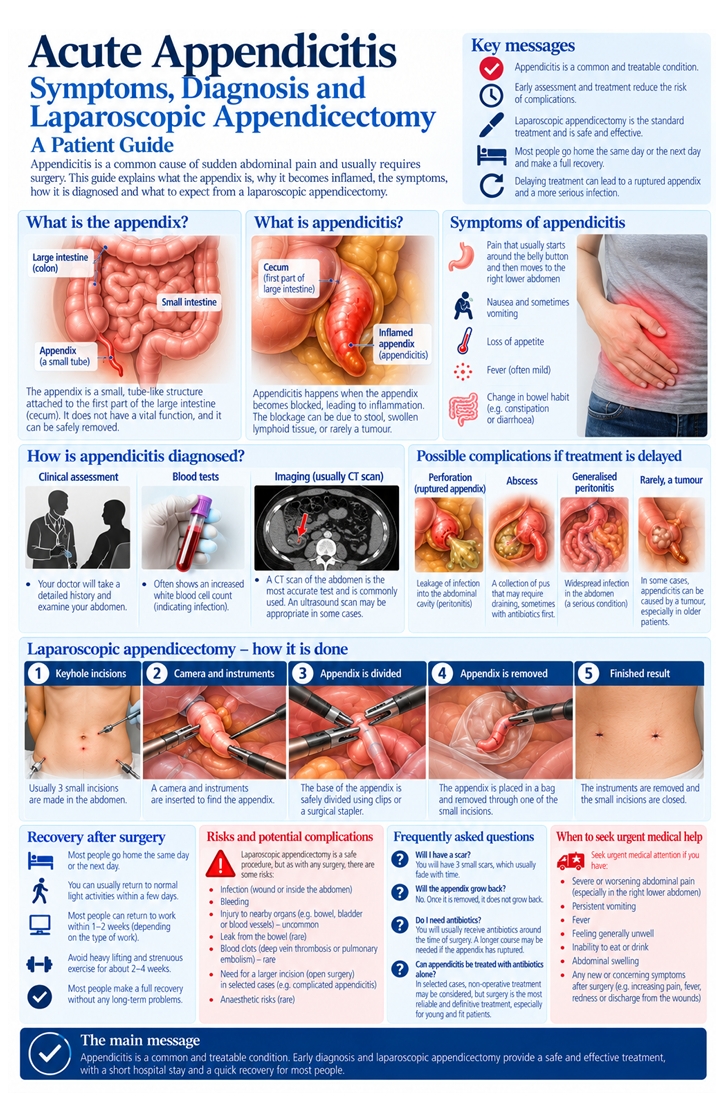
Pregnancy does not prevent appendicitis, gallbladder disease, bowel obstruction or other abdominal
emergencies. Timely diagnosis and appropriate treatment protect both the pregnant patient and the fetus.
Which emergencies can occur?
Appendicitis and symptomatic gallstones are among the more familiar conditions. Bowel obstruction,
incarcerated hernia, perforation and other causes of acute abdominal pain can also occur.
Why can diagnosis be challenging?
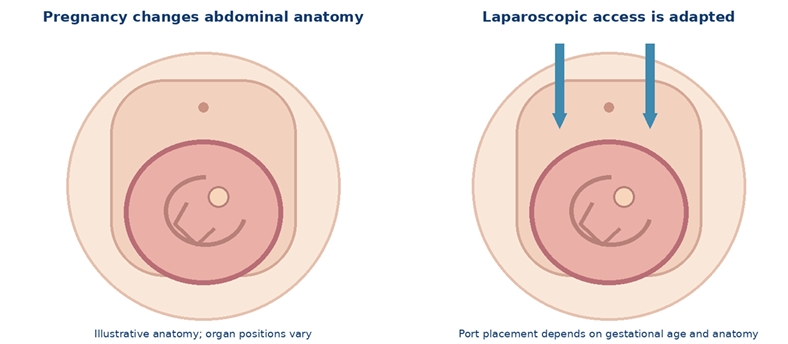
Normal pregnancy changes anatomy, heart rate and some laboratory values. Symptoms such as nausea
overlap with pregnancy-related symptoms, so clinical assessment and imaging must be interpreted carefully.
Is imaging safe?
Ultrasound is often the first investigation. MRI without gadolinium is useful when ultrasound is inconclusive and
available. CT can be justified when urgently needed to diagnose a dangerous condition; clinically necessary
imaging should not be withheld solely because of pregnancy.
Can laparoscopy be performed during pregnancy?
Yes. Laparoscopy is an accepted option for appropriately selected conditions in pregnancy, with adjustments to
positioning, port placement and anaesthetic management. The operative approach depends on gestation,
anatomy and surgical urgency.
What about anaesthesia?
Modern anaesthesia can be provided when surgery is medically necessary. The anaesthetic and obstetric teams
consider maternal physiology, gestational age and fetal monitoring as appropriate.
What if surgery is delayed?
Untreated perforation, sepsis or obstruction may pose greater risks than a necessary operation. A
multidisciplinary team balances timing and risks, but life-threatening conditions require urgent treatment.
Will the baby be monitored?
Obstetric involvement is important. Fetal assessment before and after surgery is commonly arranged, with
intraoperative monitoring considered when feasible and appropriate for gestation and resources.
What should I expect after surgery?
Care includes pain control, hydration, mobilisation and monitoring for infection or preterm contractions when
relevant. Follow-up is coordinated with the obstetric team.
Frequently asked questions
Should I wait until after delivery for surgery?
Not if there is a medically urgent condition. Necessary surgery should not be postponed solely because of
pregnancy.
Is every abdominal pain surgical?
No. Obstetric, urinary and gastrointestinal causes are considered together.
Can antibiotics replace appendicectomy?
Management is individualised, but a suspected complicated appendicitis requires urgent specialist assessment.
The key message
Early multidisciplinary assessment matters. When abdominal surgery is necessary during pregnancy, timely care
is generally safer than allowing a dangerous condition to progress.
This article is general patient education, not a substitute for assessment or personalised surgical advice. Seek emergency medical care
for severe or rapidly worsening symptoms.
Dr. Mohammed Alassaf
Consultant Bariatric & Gastrointestinal Surgeon
Dr. Alassaf is a leading expert in minimally invasive and bariatric surgery,
with extensive experience helping patients overcome obesity and related conditions.
Having completed advanced training in Australia and the Middle East, he is known
for his compassionate approach and evidence-based surgical care.