Necrotising Soft Tissue Infection: Why Emergency Surgical Debridement Is Essential
Dr-Alassaf
Nov 03, 2026
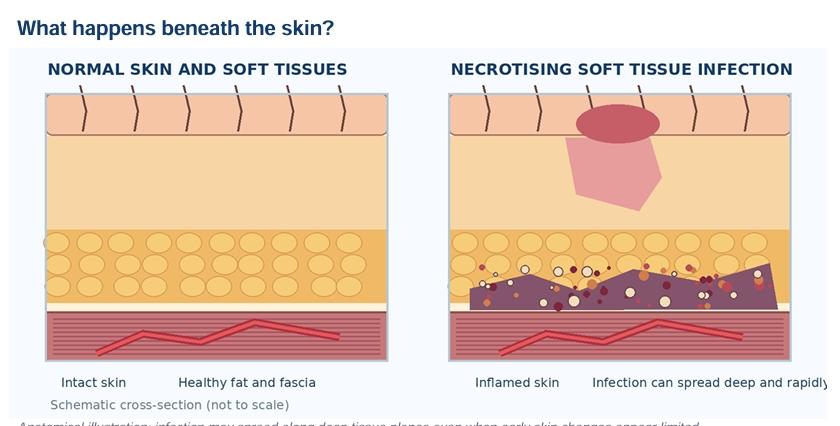
Necrotising soft tissue infection (NSTI) is an uncommon but dangerous infection that can spread rapidly through the tissue beneath the skin. It may involve the fatty tissue, fascia and sometimes muscle. Without urgent treatment, it can cause sepsis, organ failure and death.
The essential treatment is immediate assessment, antibiotics, resuscitation and prompt surgical removal of dead or infected tissue. Waiting for the skin to look severely damaged can be dangerous because the infection may already have spread deeper.
What causes necrotising soft tissue infection?
Several bacteria can cause it, sometimes together. Infection may follow a small cut, wound, injection, surgery or trauma, but no obvious entry point is always found. Diabetes, immune suppression, vascular disease and serious underlying illness can increase risk, although healthy people can also be affected.
What are the early warning signs?
Severe pain, especially pain that seems disproportionate to the visible skin changes, is an important warning sign. Rapidly spreading redness or swelling, marked tenderness, fever, weakness and a fast heart rate can occur. Later signs may include blisters, purple or dark skin, numbness, crackling under the skin and shock. Not all signs are present.
Why is it often difficult to diagnose?
Early symptoms may resemble cellulitis. A patient can have significant deep tissue infection before the skin appears badly affected. Blood tests and CT imaging can support diagnosis, but a normal or inconclusive result cannot reliably exclude NSTI. When clinical suspicion is high, surgical exploration must not be delayed for imaging.
What happens immediately in hospital?
The team urgently assesses circulation, breathing and organ function, starts broad-spectrum intravenous antibiotics and provides fluid and organ support as indicated. Blood cultures and tissue samples may help identify the organism, but treatment starts before final results. Surgeons and critical-care specialists are involved early.
Why is surgery so important?
Antibiotics cannot reliably reach all dead tissue. Surgery allows the team to open affected areas, assess the extent of infection, remove nonviable tissue and wash out the wound. This is called debridement and is the cornerstone of treatment.
Will one operation be enough?
Not always. The surgeon may plan a second examination in theatre within about 24 hours, or sooner if the patient worsens. Repeated debridements are sometimes necessary until no further dead tissue remains. This does not necessarily mean the first operation failed; the disease can evolve rapidly.
Can the infection affect the abdomen or groin?
Yes. NSTI can occur in the abdominal wall, perineum or groin. Infection involving the genital or perineal region is often called Fournier gangrene. Depending on the site and source, surgeons may also need to drain an abscess or treat an underlying bowel or urinary problem.
Will I need a skin graft or reconstructive surgery?
After infection is controlled, the wound may require specialised dressings, negative-pressure wound therapy, delayed closure, a skin graft or reconstructive surgery. The timing depends on the size and location of the wound and the patient's recovery.
Is amputation ever necessary?
Rarely, when a limb is extensively involved and cannot be safely preserved, amputation may be required to save life. Surgeons try to preserve function while prioritising complete infection control.
What complications can occur?
Possible complications include septic shock, kidney or lung failure, prolonged intensive care, blood clots, significant scarring, loss of tissue and functional limitations. Outcomes depend on the speed of treatment, infection extent and the patient's health.
What does recovery involve?
Recovery often requires a prolonged hospital stay, wound care, nutritional support, physiotherapy and sometimes psychological support. Rehabilitation and reconstruction may continue after discharge. The timeline varies considerably.
What happens after discharge?
Follow-up focuses on wound healing, infection recurrence, mobility, scar management and any ongoing medical conditions. New fever, increasing pain, spreading redness, wound odour or a sudden deterioration requires immediate medical review.
Frequently Asked Questions
Is this the same as ordinary cellulitis?
No. Cellulitis usually affects more superficial tissue; NSTI destroys deeper tissues and requires urgent surgical assessment.
Can antibiotics alone cure it?
They are essential, but suspected or confirmed NSTI generally requires surgical exploration and debridement.
Is it contagious?
The infection itself does not typically spread through casual contact, although some causative bacteria can be transmitted. The hospital team will advise on precautions.
Can it happen after surgery?
Yes, although it is rare. Rapidly worsening pain, swelling or systemic illness after an operation should be assessed urgently.
Can patients recover fully?
Many survivors recover, but some require prolonged rehabilitation or reconstructive procedures.
The key message
Suspected necrotising soft tissue infection is a surgical emergency. Early recognition, immediate antibiotics and resuscitation, and urgent debridement give patients the best chance of survival. Do not wait for dramatic skin changes before seeking emergency care.
This article is for patient education and does not replace emergency assessment. Seek urgent hospital care for rapidly worsening soft-tissue pain or swelling, particularly with fever, confusion or faintness.
Dr. Mohammed Alassaf
Consultant Bariatric & Gastrointestinal Surgeon
Dr. Alassaf is a leading expert in minimally invasive and bariatric surgery,
with extensive experience helping patients overcome obesity and related conditions.
Having completed advanced training in Australia and the Middle East, he is known
for his compassionate approach and evidence-based surgical care.