Perforated Peptic Ulcer: When Emergency Surgery Is Needed
Peptic Ulcers & Gastrointestinal Perforation
Perforated Peptic Ulcer: When Emergency Surgery Is Needed
Dr-Alassaf
Nov 02, 2026
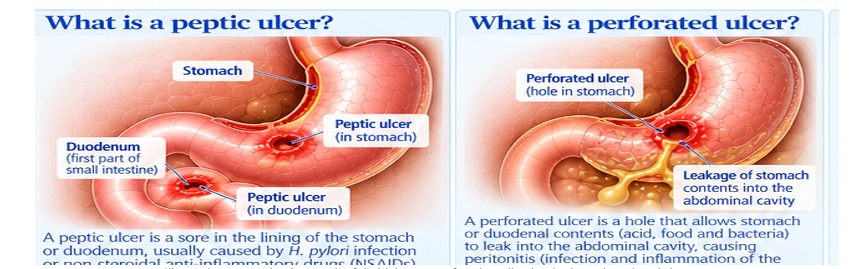
A perforated peptic ulcer is a hole through the wall of the stomach or duodenum. Digestive fluid can escape into
the abdominal cavity and cause chemical inflammation, infection and potentially life-threatening sepsis. Sudden
severe abdominal pain needs urgent hospital assessment.
What causes a perforated peptic ulcer?
The two major causes of peptic ulcer disease are Helicobacter pylori infection and non-steroidal anti-inflammatory
drugs (NSAIDs), including ibuprofen and diclofenac. Smoking and serious illness can increase risk. Not every
perforation has a previously diagnosed ulcer.
What symptoms should make me seek emergency help?
The classic presentation is sudden, severe upper abdominal pain, which may rapidly become widespread. The
abdomen may be rigid and extremely tender. Nausea, vomiting, fever, dizziness, a fast pulse or collapse can
occur. Older or immunosuppressed patients may have less typical symptoms. This is an emergency: do not wait
for symptoms to settle.
How is it diagnosed?
The team assesses vital signs, abdominal findings and blood tests, including markers of infection, kidney function
and lactate when indicated. CT scanning often identifies free air or fluid and may help locate the perforation. A
normal early blood test does not exclude a serious perforation.
What happens immediately in hospital?
Treatment begins with intravenous fluids, pain relief, intravenous antibiotics, acid suppression and careful
monitoring. A nasogastric tube may be used selectively. The surgical and anaesthetic teams assess the need for
urgent operative source control.
Does every perforated ulcer require surgery?
Most patients with free perforation and peritonitis need urgent surgery. A small, demonstrably sealed perforation
may occasionally be managed without surgery in a carefully selected, stable patient with close monitoring and
immediate access to an operating theatre. This is an exception, not a home-treatment option.
How is the operation performed?
In suitable patients, laparoscopic surgery uses small incisions to inspect the abdomen, identify the perforation and
wash away leaked contents. The defect may be closed with sutures, often reinforced with an omental patch. Open
surgery may be safer when the patient is unstable, contamination is extensive, or anatomy is difficult. A large
gastric ulcer or suspicious tissue may require biopsy or a different operation.
Why might the surgeon change the plan?
The exact operation depends on the site and size of the hole, tissue quality, degree of contamination, patient
stability and concern for malignancy. A repair that is appropriate for a small duodenal perforation may not be
appropriate for a large or suspicious gastric ulcer.
What are the risks?
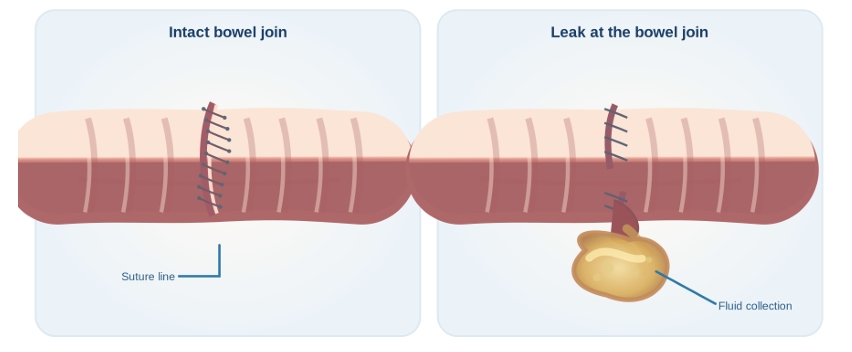
Possible complications include wound or intra-abdominal infection, abscess, bleeding, leakage from the repair,
pneumonia, blood clots, organ dysfunction and, in severe cases, death. Risk rises with delayed presentation,
shock, frailty and significant medical illness.
What happens after surgery?
Recovery includes fluids, antibiotics for an appropriate course, acid suppression, early mobilisation and gradual
resumption of oral intake as clinically appropriate. Length of stay varies with the severity of contamination and the
patient’s condition. A more severe perforation may require intensive care.
How do we prevent another ulcer?
Patients should be tested for H. pylori and receive eradication therapy if positive, with confirmation of eradication
according to the treatment plan. NSAIDs should be avoided when possible or used only after a risk-benefit
discussion. A proton-pump inhibitor is usually prescribed during healing. Smoking cessation also helps.
Do I need a follow-up endoscopy?
Gastric ulcers generally require appropriate endoscopic follow-up to confirm healing and exclude malignancy,
particularly if the original ulcer was suspicious or could not be adequately sampled. The timing and need for
endoscopy are individualised.
Frequently asked questions
Can an ulcer perforate without warning? Yes. Some patients have little preceding indigestion.
Can antibiotics alone close the hole? Not reliably; most free perforations need operative source control.
Can the operation be laparoscopic? Often, when the patient is stable and the perforation is suitable.
Will the ulcer come back? Recurrence risk can be reduced by treating H. pylori, addressing NSAID use and
completing follow-up.
The key message
A perforated peptic ulcer is a surgical emergency in most patients. Rapid diagnosis, resuscitation and timely
source control are essential. Long-term care must also treat the cause of the ulcer, not just the perforation.
Dr. Mohammed Alassaf
Consultant Bariatric & Gastrointestinal Surgeon
Dr. Alassaf is a leading expert in minimally invasive and bariatric surgery,
with extensive experience helping patients overcome obesity and related conditions.
Having completed advanced training in Australia and the Middle East, he is known
for his compassionate approach and evidence-based surgical care.