Rectal cancer surgery is technically different from colon surgery because the rectum lies deep inside the pelvis, surrounded by the bladder, reproductive organs, pelvic nerves and anal sphincter. Successful treatment depends on accurate MRI staging, multidisciplinary planning and meticulous surgery within the correct anatomical plane.
Why is pelvic MRI so important?
MRI shows how deeply the tumour has grown, its relationship to the mesorectal fascia, nearby lymph nodes, the anal sphincter and other pelvic structures. These details help decide whether surgery should be performed first or after chemotherapy and/or radiotherapy.
What is the mesorectum?
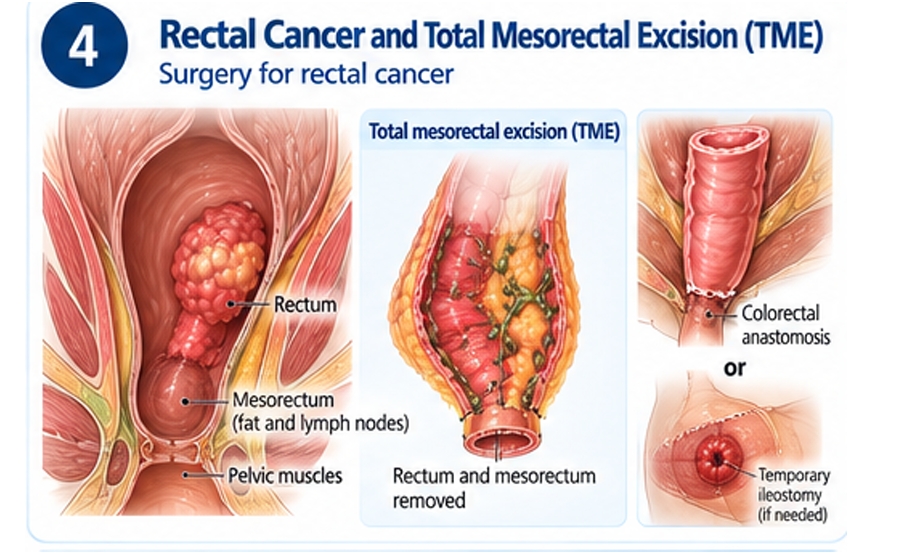
The mesorectum is the fatty tissue surrounding the rectum. It contains blood vessels, lymphatics and lymph nodes and is enclosed by a fascial envelope. Cancer cells can spread within this tissue even when they are not visible to the eye.
What is total mesorectal excision?
TME is the precise removal of the rectum together with the intact mesorectal envelope. The surgeon follows the natural anatomical plane around the mesorectum, aiming to remove the cancer and regional lymphatic tissue while protecting surrounding pelvic structures.
Why does the surgical plane matter?
Staying in the correct plane improves the quality of the cancer specimen and helps reduce local recurrence. It also helps protect the pelvic autonomic nerves that contribute to bladder and sexual function.
Can the anal sphincter be preserved?
Often, yes. Sphincter preservation depends on tumour height, response to preoperative treatment, the ability to achieve a clear distal margin, sphincter involvement and pre-existing function. Cancer clearance remains the priority.
What is an anterior resection?
When the sphincter can be preserved, the rectum containing the tumour is removed and the colon is joined to the remaining rectum or anal canal. Very low joins may be protected temporarily with a loop ileostomy.
When is an abdominoperineal resection needed?
If the tumour involves the sphincter complex or is too low to achieve an adequate cancer margin while preserving function, removal of the rectum and anus may be necessary, resulting in a permanent colostomy.
What about chemotherapy and radiotherapy?
Many locally advanced rectal cancers receive treatment before surgery. Modern strategies may use chemotherapy and radiotherapy in different sequences, including total neoadjuvant therapy. The plan is individualised according to MRI-defined risk.
Can surgery affect urinary or sexual function?
Yes. Pelvic nerves lie close to the rectum. Modern TME deliberately aims to preserve them when oncologically safe, but temporary or permanent urinary and sexual changes can occur.
What happens after surgery?
Recovery includes adaptation of bowel function. Patients with a low anastomosis can experience frequency, urgency, clustering and fragmentation of stool - collectively called low anterior resection syndrome. Symptoms often improve over time.
Frequently Asked Questions
Does every rectal cancer need radiotherapy?
No. Treatment is determined by MRI stage, tumour location and recurrence risk.
Can TME be performed laparoscopically?
Yes in selected patients, provided the oncological quality of the operation is maintained.
Is a temporary ileostomy always required?
No. It is used selectively, particularly to protect a low pelvic anastomosis.
The key message
Rectal cancer treatment combines precise MRI staging, appropriate preoperative oncological treatment and high-quality TME surgery. Preserving the sphincter and pelvic nerves is important, but never at the expense of complete cancer clearance.
This article is for general patient education and does not replace individual assessment, cancer staging, multidisciplinary review or advice from your treating surgical team.
Dr. Mohammed Alassaf
Consultant Bariatric & Gastrointestinal Surgeon
Dr. Alassaf is a leading expert in minimally invasive and bariatric surgery,
with extensive experience helping patients overcome obesity and related conditions.
Having completed advanced training in Australia and the Middle East, he is known
for his compassionate approach and evidence-based surgical care.