Revisional bariatric surgery means operating again after a previous weight-loss procedure to correct a complication, treat a new problem or improve an inadequate long-term result. It is not simply a 'second attempt' at bariatric surgery. The reason for revision needs to be clearly defined before another operation is chosen.
Revision can be highly effective, but it is usually more technically demanding than primary bariatric surgery. Previous staple lines, altered anatomy, adhesions and changes in blood supply mean that careful investigation and individual planning are especially important.
Why might revisional surgery be needed?
Common reasons include severe reflux after sleeve gastrectomy, anatomical problems, complications of a previous operation, inadequate weight loss or significant weight regain despite appropriate non-surgical treatment. More than one problem may be present at the same time.
Revision is not automatically the first treatment for weight regain
Weight regain can result from appetite biology, nutrition, medications, activity, psychological factors and anatomy. I first identify the likely mechanism. Dietetic treatment and anti-obesity medication may be appropriate before an operation is considered.
Reflux after sleeve is an important indication
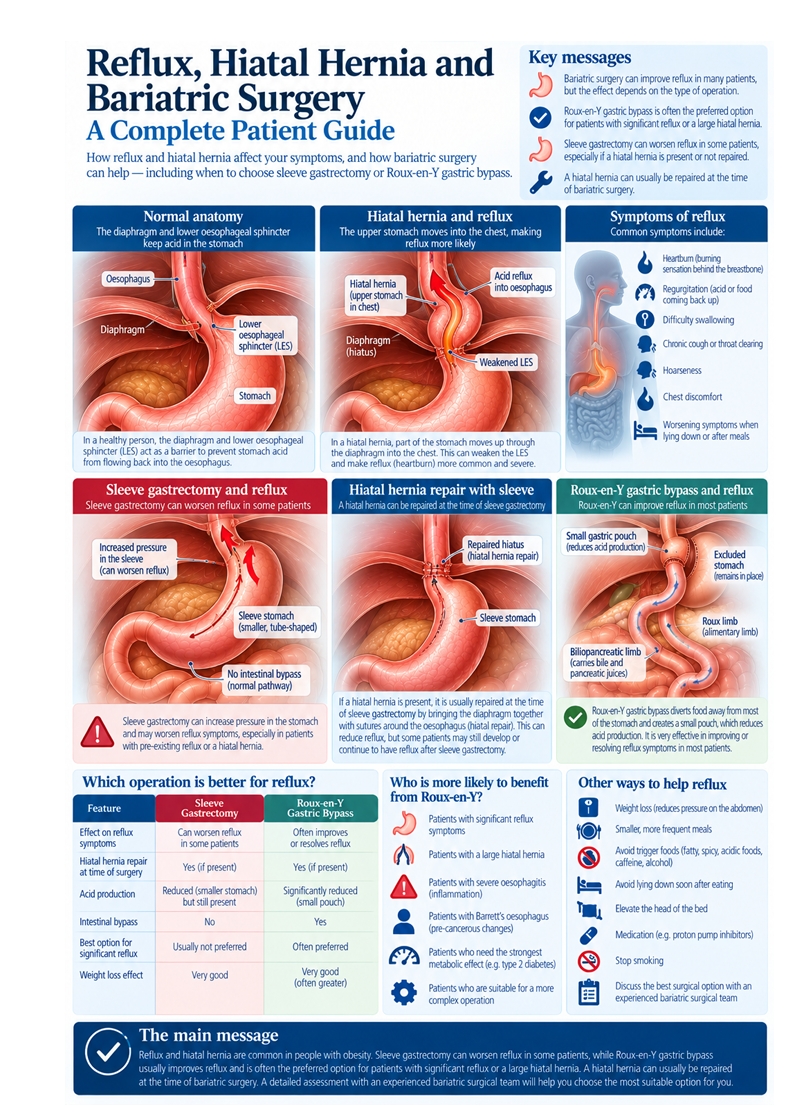
Sleeve gastrectomy can cause new reflux or worsen existing GERD. When reflux becomes significant and remains poorly controlled despite appropriate medical treatment, revisional surgery may be needed.
Why Roux-en-Y is important in reflux revision
For selected patients with severe reflux after sleeve, conversion to Roux-en-Y gastric bypass is an established revisional option. Its anatomy generally reduces acid and bile exposure to the oesophagus while also maintaining a bariatric metabolic effect.
What anatomical problems can require revision?
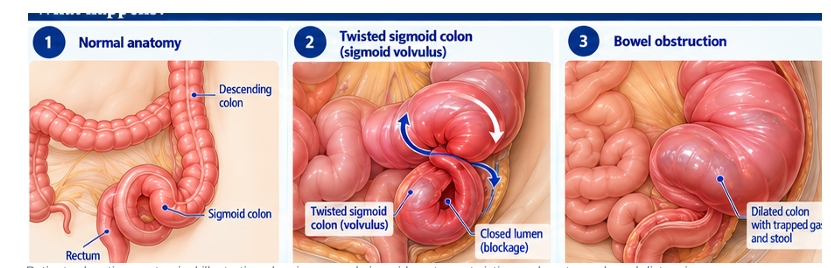
Examples include sleeve stenosis or twisting, recurrent hiatal hernia, enlargement of a gastric pouch or gastrojejunostomy, marginal ulcer complications, obstruction and selected internal-hernia problems. The treatment must match the actual anatomical diagnosis.
The importance of endoscopy
Upper endoscopy can assess oesophagitis, Barrett's oesophagus, marginal ulcer, sleeve narrowing, pouch size and the gastrojejunostomy. It is often central to planning revision for reflux, vomiting or suspected anatomical problems.
Imaging before revision
Contrast studies and CT can provide information about sleeve shape, obstruction, hernia and bowel anatomy. The investigation is selected according to the symptoms and the original operation.
Understanding the original operation
Previous operative reports are valuable because they document what was actually performed, including anatomy, limb configuration, hiatal repair and any previous complications. When available, I review these details before planning revision.
Nutritional assessment before another operation
Revisional patients can already have iron, vitamin B12, folate, vitamin D, calcium or other deficiencies. These should be identified and corrected whenever possible before another period of restricted intake.
Conversion from sleeve to Roux-en-Y gastric bypass
This is an important revisional operation for selected patients with medically refractory GERD after sleeve and can also be considered when other defined clinical or metabolic indications are present. A small pouch is created and the small bowel is reconstructed into a Roux-en-Y configuration.
What happens to a hiatal hernia during revision?
If a hiatal hernia is present, I repair it as part of the operation when appropriate. Revisional reflux surgery should address the hiatus as well as the bariatric anatomy.
Revision after Roux-en-Y gastric bypass
Problems after bypass require a different approach. Investigation may identify marginal ulcer, gastrojejunal stenosis, internal hernia, pouch or anastomotic enlargement, fistula or other anatomical issues. Treatment may be medical, endoscopic or surgical.
Why I close mesenteric defects
When performing or reconstructing a Roux-en-Y gastric bypass, I close the mesenteric defects to reduce the risk of future internal hernia. Closure lowers risk but cannot eliminate it completely.
Leak risk in revisional surgery
Revisional surgery involves previously operated tissue and can carry a higher risk of leak than straightforward primary surgery. Meticulous technique and appropriate intraoperative assessment are therefore particularly important.
Why I perform a leak test
I routinely perform an intraoperative leak test after sleeve and Roux-en-Y procedures, including revisional reconstruction when appropriate. It provides an additional check of the new staple line or anastomosis before completing the operation.
Bleeding and infection
As with primary bariatric surgery, postoperative bleeding and infection can occur. Previous surgery can make dissection more complex, which is one reason revision should be carefully planned.
DVT and pulmonary embolism
Revisional surgery still carries venous-thromboembolism risk. Early mobilisation is important, and in my routine pathway patients receive anticoagulant DVT prophylaxis for two weeks after surgery unless individual risk requires modification.
Nutrition after revision
The nutritional requirements depend on the final anatomy. Conversion to bypass increases the importance of lifelong vitamin and mineral supplementation and laboratory monitoring.
PPI therapy
I routinely prescribe PPI therapy during postoperative healing. After bypass this also helps reduce acid exposure around the gastrojejunostomy. Duration is individualised.
Gallstones and rapid renewed weight loss
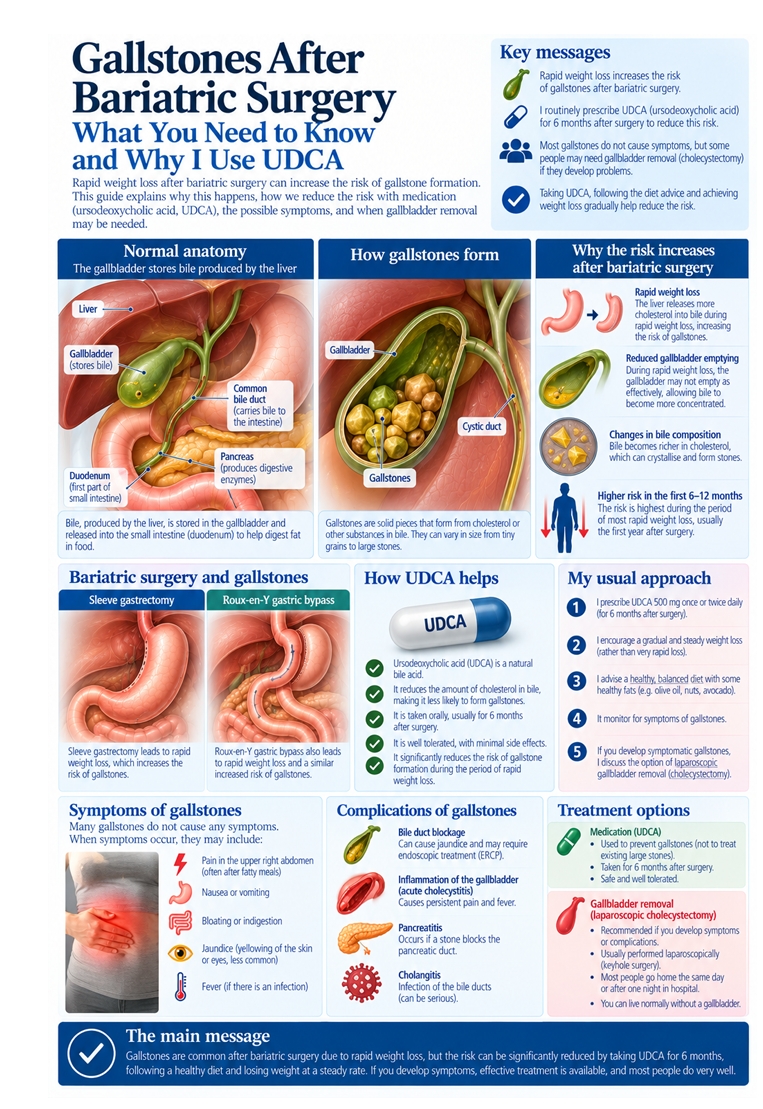
If revision produces another period of rapid weight loss and the gallbladder remains present, gallstone risk should again be considered. I offer UDCA when appropriate during rapid weight loss.
Is revision always performed laparoscopically?
Many revisions can be completed laparoscopically, but previous operations and adhesions can make surgery more difficult. The safest approach is determined by the patient's anatomy and operative findings.
Will revision produce the same weight loss as the first operation?
Not necessarily. Outcomes depend on the indication and the type of revision. A procedure performed primarily to control severe reflux has a different objective from one performed mainly for metabolic or weight-related reasons.
Recovery after revisional surgery
Recovery depends on the extent of reconstruction and the patient's previous operations. Diet again progresses in stages, hydration and protein are prioritised, and activity increases gradually.
Why follow-up is particularly important
Revisional patients need ongoing monitoring for nutrition, reflux, weight trajectory and late complications. The new anatomy should be documented clearly so that future clinicians understand what has been performed.
My approach to revisional bariatric surgery
I do not choose a revisional operation from the weight alone. I first define the problem: reflux, weight regain, inadequate metabolic response, obstruction or another anatomical complication. I review the previous operation, investigate the anatomy and assess nutritional and metabolic status. For significant reflux after sleeve, I commonly consider conversion to Roux-en-Y gastric bypass. If a hiatal hernia is present, I repair it. During Roux-en-Y reconstruction I close all mesenteric defects, and I routinely perform an intraoperative leak test. Postoperative care includes PPI therapy, two weeks of DVT prophylaxis and UDCA during rapid weight loss when appropriate.
Frequently Asked Questions
Does weight regain automatically mean I need revision?
No. The cause should be assessed first, and many patients can be treated without another operation.
What is a common revision for severe reflux after sleeve?
Conversion from sleeve gastrectomy to Roux-en-Y gastric bypass is an established option in appropriately selected patients.
Can a hiatal hernia be repaired during revision?
Yes. When present and clinically relevant, I repair it as part of the revisional operation.
Is revisional surgery riskier than primary bariatric surgery?
It is generally more technically complex and some complication risks can be higher.
Will I need an endoscopy before revision?
Often, particularly when reflux, vomiting, ulceration or altered upper gastrointestinal anatomy is suspected.
Can revision be done laparoscopically?
Many revisions can, although the final approach depends on previous surgery and operative findings.
Will I need another leak test?
I routinely perform an intraoperative leak test after the relevant bariatric reconstruction.
If I am converted to bypass, will I need lifelong vitamins?
Yes. Lifelong supplementation and nutritional blood monitoring are essential after Roux-en-Y.
Does revision guarantee more weight loss?
No. The expected outcome depends on the indication, anatomy and type of revision.
Why is long-term follow-up so important after revision?
Because nutritional requirements and potential late complications depend on the new anatomy, and some problems can arise years later.
The key message
Revisional bariatric surgery can be very effective when there is a clearly defined problem and the new operation is matched to its cause. It requires more investigation and planning than primary surgery. For severe reflux after sleeve, conversion to Roux-en-Y gastric bypass is an important option; for weight regain, the cause should be established before deciding that another operation is necessary.
Patient-information note: revisional bariatric surgery is highly individualised. The appropriate investigation, operative strategy and expected benefit depend on the original procedure, current anatomy, symptoms and nutritional status.
Dr. Mohammed Alassaf
Consultant Bariatric & Gastrointestinal Surgeon
Dr. Alassaf is a leading expert in minimally invasive and bariatric surgery,
with extensive experience helping patients overcome obesity and related conditions.
Having completed advanced training in Australia and the Middle East, he is known
for his compassionate approach and evidence-based surgical care.