Acute Intestinal Obstruction: Causes, Symptoms and When Surgery Is Needed
Bowel Obstruction & Intestinal Emergencies
Acute Intestinal Obstruction: Causes, Symptoms and When Surgery Is Needed
Dr-Alassaf
Nov 02, 2026
A blocked bowel can be frightening, but the cause and urgency differ from patient to patient. This guide explains
what symptoms mean, how we investigate obstruction, when non-operative treatment is reasonable and when an
operation is necessary.
What is an intestinal obstruction?
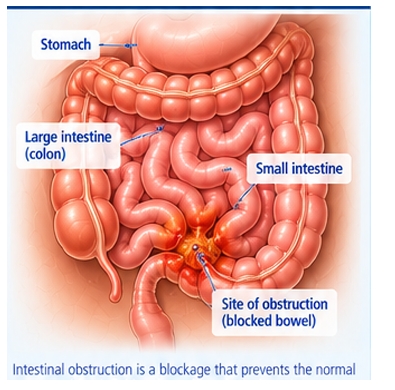
An intestinal obstruction prevents the normal passage of fluid, food and gas through the small or large bowel. A
mechanical blockage differs from ileus, in which the bowel temporarily fails to propel its contents despite no
physical blockage. Both can produce distension, nausea and vomiting, but their treatments differ.
What causes a bowel obstruction?
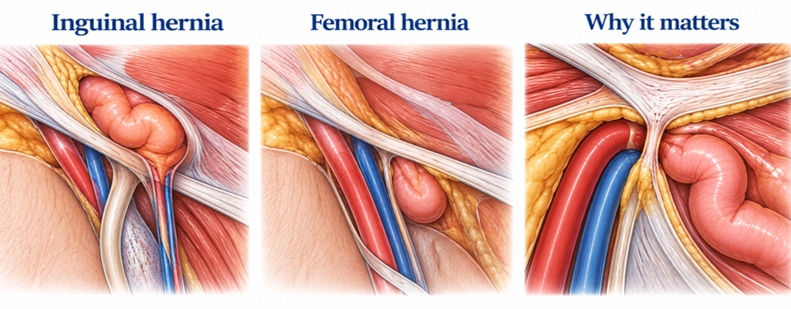
Common causes of small-bowel obstruction include adhesions (internal scar tissue) from previous abdominal
surgery and incarcerated hernias. Other causes include inflammatory narrowing, tumours, twisting of the bowel
(volvulus) and, less commonly, intussusception. Large-bowel obstruction can result from colorectal cancer,
volvulus or benign strictures, including those related to diverticular disease.
What symptoms should patients recognise?
Typical symptoms are cramping abdominal pain, progressive bloating, nausea, vomiting and difficulty passing
stool or wind. A partial obstruction may still allow some stool or gas to pass. Persistent severe pain, fever, marked
tenderness or feeling faint or very unwell raises concern for complications and needs urgent assessment.
How is the diagnosis made?
I begin with the history and abdominal examination, including previous operations and the presence of a hernia.
Blood tests assess dehydration, kidney function, electrolyte disturbances and evidence of inflammation or tissue
injury, but no single blood test reliably rules out strangulation. CT scanning, usually with intravenous contrast
when appropriate, is central in many adults because it helps identify the site, cause and severity of obstruction
and possible bowel ischaemia.
Why is a strangulated obstruction dangerous?
In strangulation, the obstruction compromises the bowel blood supply. The affected segment can become
ischaemic and eventually die. Perforation and sepsis may follow. A closed-loop obstruction, in which a segment is
blocked at two points, is particularly concerning. Suspected strangulation, ischaemia, perforation or peritonitis
usually requires emergency surgery.
Can bowel obstruction resolve without surgery?
Yes, some uncomplicated adhesive small-bowel obstructions resolve with hospital observation, intravenous
fluids, correction of electrolytes and nasogastric decompression when needed. Selected patients may undergo a
water-soluble contrast challenge to help predict resolution. This approach requires repeated examinations and
monitoring; it is inappropriate when signs suggest bowel compromise or another condition requiring urgent
operation.
Does every complete obstruction need an operation?
Not automatically: the decision depends on the cause, CT findings, clinical stability, evidence of bowel
compromise and response to treatment. Some adhesive obstructions resolve without surgery under close
observation, whereas an obstructed or strangulated hernia, volvulus with threatened bowel or a perforated bowel
may require urgent intervention. Large-bowel obstruction needs its own cause-specific plan.
What happens during emergency surgery?
The aim is to find and relieve the obstruction while preserving viable bowel. Depending on the cause, I may divide
adhesions, reduce and repair a hernia, untwist a volvulus, or remove a diseased bowel segment. If bowel has lost
its blood supply or is perforated, resection may be necessary. The healthy ends can sometimes be joined
(anastomosis); in other situations, a temporary or permanent stoma is safer.
Laparoscopic or open surgery?
Some obstructions can be treated laparoscopically, particularly in selected patients with a likely single adhesion
and limited distension. Very dilated or fragile bowel, dense adhesions, uncertain anatomy or severe
contamination may favour open surgery or require conversion. The safest route is more important than the size of
the incision.
What if the obstruction is caused by a tumour?
If a colorectal tumour causes the blockage, management depends on the tumour location, degree of obstruction,
patient stability and staging. Surgery may be required; in selected left-sided malignant obstructions, a colonic
stent can sometimes be used as a bridge to surgery or for palliation. Treatment should be coordinated with the
colorectal and oncology teams.
What is recovery like?
Recovery varies widely. An obstruction that settles without surgery may require only a short admission, while
bowel resection, sepsis or a stoma can mean a longer hospital stay. Oral intake is advanced according to bowel
function and clinical progress. Walking, pain control, fluid management and prevention of blood clots are
important throughout recovery.
What are the risks?
Risks depend on the underlying disease and procedure. They include recurrent obstruction, infection, bleeding,
bowel injury, leak from an anastomosis, wound complications, blood clots and, in severe cases, organ failure.
Patients who require bowel resection or a stoma need individual counselling about their recovery and longer-term
care.
When should I seek emergency help?
Seek urgent medical assessment for persistent or worsening abdominal pain, repeated vomiting, increasing
distension, inability to pass stool or wind with pain and swelling, fever, fainting or a painful irreducible hernia. Do
not try laxatives or force food or drink when a bowel obstruction is suspected.
Frequently asked questions
Can I still pass stool if I have an obstruction? Yes, particularly early in the illness or with partial obstruction.
Can an old operation cause obstruction years later? Yes; adhesions may cause symptoms long after the
original surgery. Will I always need a stoma? No; a stoma is required only in selected situations. Can
obstruction recur? Yes, particularly when adhesions remain or reform. Is severe pain always present? No; the
symptoms vary and a change from intermittent cramps to constant severe pain is especially concerning.
The key message
Bowel obstruction is potentially serious, but not every patient requires surgery. Careful assessment and CT
imaging help distinguish patients who can be monitored safely from those needing urgent intervention. When
bowel blood supply is threatened, prompt surgery can be lifesaving.
This article is general patient education, not a substitute for urgent clinical assessment or personalised surgical advice.
Dr. Mohammed Alassaf
Consultant Bariatric & Gastrointestinal Surgeon
Dr. Alassaf is a leading expert in minimally invasive and bariatric surgery,
with extensive experience helping patients overcome obesity and related conditions.
Having completed advanced training in Australia and the Middle East, he is known
for his compassionate approach and evidence-based surgical care.