Emergency Surgery for Bowel Ischaemia and Necrosis: When Bowel Resection Is Necessary
Dr-Alassaf
Nov 03, 2026
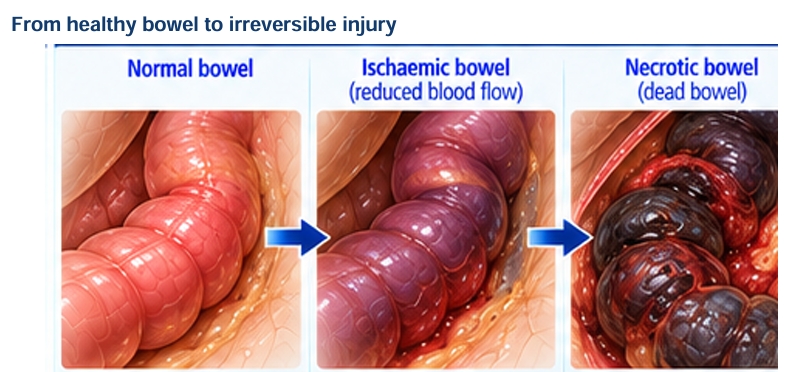
Bowel ischaemia occurs when part of the intestine receives too little blood and oxygen. If circulation is not
restored in time, the affected bowel may become irreversibly damaged, a condition called bowel necrosis. This
can cause perforation, severe infection and shock.
Not every patient with bowel ischaemia needs bowel removal. The main priorities are to identify the cause, restore
blood flow whenever possible and remove bowel that has already died.
What can cut off the blood supply to the bowel?
A clot may block a mesenteric artery, an artery may narrow or thrombose, or blood flow may fall dangerously low
during shock. Venous thrombosis can obstruct blood drainage. Bowel can also lose circulation when trapped in a
strangulated hernia, twisted in a volvulus, or tightly compressed by an obstruction or adhesions.
Is this different from acute mesenteric ischaemia?
Acute mesenteric ischaemia is the broader diagnosis of sudden inadequate intestinal blood supply. Bowel
necrosis is one possible consequence. This article focuses on what happens when bowel viability is threatened or
lost and how surgeons decide whether resection is necessary.
What symptoms should prompt emergency assessment?
Sudden severe abdominal pain, particularly pain that seems much worse than the early examination suggests, is
concerning. Nausea, vomiting, diarrhoea, abdominal distension or blood in the stool may occur. As damage
progresses, the abdomen may become rigid or very tender, with fever, low blood pressure or confusion.
How is bowel ischaemia diagnosed?
CT angiography is usually the key investigation when acute mesenteric ischaemia is suspected. It can identify
vascular blockage and signs of bowel injury. Blood tests help assess illness severity, but a normal lactate level
does not rule out early ischaemia. If there are signs of peritonitis or profound instability, urgent surgery may be
needed.
What treatment starts before surgery?
The team begins intravenous access, fluid and circulatory support as indicated, pain relief, antibiotics when bowel
injury or infection is suspected, and anticoagulation when appropriate. General surgeons, vascular specialists and
interventional radiologists may work together to restore blood flow.
Can the bowel be saved without removing it?
Sometimes. If bowel is still viable, restoring blood flow by endovascular treatment or open vascular surgery may
allow it to recover. In strangulated hernia or volvulus, releasing the trapped or twisted bowel may restore
circulation. The approach depends on the cause, how long the bowel has been deprived of blood and whether
there is peritonitis.
When must the surgeon remove bowel?
Resection is necessary when a segment is clearly nonviable or has perforated. Leaving dead bowel in the
abdomen can cause ongoing contamination, severe infection and death. The surgeon aims to preserve as much
healthy intestine as is safely possible.
How does the surgeon decide whether bowel is viable?
The surgeon assesses bowel colour, movement, wall condition, bleeding at cut edges and the state of the
mesenteric blood supply. Doppler or fluorescence perfusion assessment may help in selected operations. Viability
can remain uncertain even after circulation is restored.
Will the healthy bowel ends be joined together?
They may be joined in an anastomosis when the tissues and the patient’s circulation are suitable. In severe
shock, widespread contamination or questionable tissue perfusion, it may be safer to delay the join or create a
stoma. This decision is made during surgery.
What is a second-look operation?
When viability is uncertain or the patient is critically ill, the surgeon may plan a second operation, often within
24–48 hours, to reassess the bowel after resuscitation and restoration of blood flow. This can prevent
unnecessary removal of bowel that later recovers while identifying segments that remain nonviable.
What happens if a large amount of bowel is removed?
Extensive small-bowel resection can lead to short bowel syndrome, in which the remaining intestine cannot
absorb enough fluids or nutrients. Some patients need specialised diets, medicines, supplements or intravenous
nutrition. The impact depends on the length and part of bowel remaining.
What are the risks of emergency bowel resection?
Important risks include bleeding, infection, anastomotic leakage, need for a stoma, blood clots, organ failure and
the effects of severe sepsis or shock. Mortality risk can be substantial when diagnosis is delayed or extensive
bowel has died.
What is recovery like?
Recovery varies from a short hospital stay after limited resection to prolonged intensive care after extensive
ischaemia. Treatment may include antibiotics, nutrition support, stoma education, rehabilitation and follow-up to
manage the underlying vascular or cardiac cause.
Can bowel ischaemia happen again?
It can. Long-term prevention may involve anticoagulation for selected patients, management of atrial fibrillation,
vascular risk reduction, smoking cessation or treatment of a hernia or obstruction. Follow-up is tailored to the
cause.
Frequently Asked Questions
Does dark bowel always need to be removed?
No. Bowel appearance may improve after restoring blood flow and warming or resuscitation. Surgeons assess
viability carefully and may plan a second look.
Is a stoma always permanent?
No. Some stomas are temporary, but reversal depends on remaining bowel, healing and overall health.
Can keyhole surgery be used?
Laparoscopy may be appropriate in selected stable patients, but open surgery is often required when bowel
viability must be assessed extensively or the patient is unstable.
Can blood tests alone exclude bowel ischaemia?
No. Normal early blood tests do not reliably exclude it. Clinical suspicion and urgent imaging are crucial.
Will I need blood thinners afterward?
Some causes, such as mesenteric venous thrombosis or embolism from atrial fibrillation, may require
anticoagulation; the plan is individualised.
The key message
Bowel ischaemia is a time-critical emergency. Early diagnosis and restoration of blood flow may save the
intestine. If a segment has become irreversibly damaged, prompt removal of nonviable bowel is essential
to control complications while preserving as much healthy bowel as possible.
Patient education only. Sudden severe abdominal pain, especially with vomiting, fainting, blood in the stool or signs of shock, requires
immediate emergency medical assessment.
Dr. Mohammed Alassaf
Consultant Bariatric & Gastrointestinal Surgeon
Dr. Alassaf is a leading expert in minimally invasive and bariatric surgery,
with extensive experience helping patients overcome obesity and related conditions.
Having completed advanced training in Australia and the Middle East, he is known
for his compassionate approach and evidence-based surgical care.