Polyps are growths arising from the lining of the bowel. Many are benign, but some can progress toward
cancer over time. Endoscopic removal is a major way colonoscopy prevents colorectal cancer.
Are all polyps cancerous?
No. Polyps vary from harmless hyperplastic lesions to adenomas and serrated lesions with precancerous
potential. Appearance suggests the type, but pathology often provides the final classification.
How are small polyps removed?
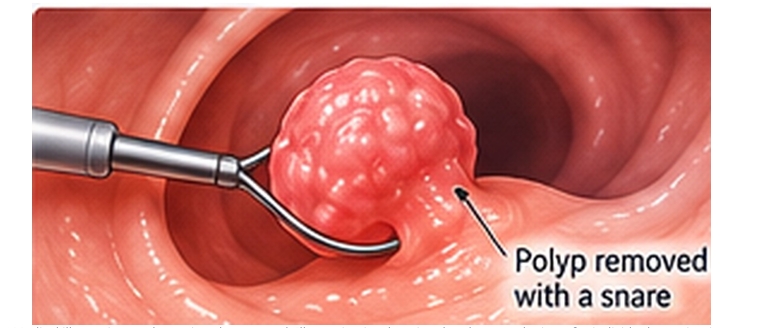
Many small polyps can be removed using a snare, often with a cold-snare technique that does not use
electrical heat. The choice depends on size, shape and location.
What about large or flat polyps?
Selected larger lesions may require advanced techniques such as endoscopic mucosal resection (EMR) or
endoscopic submucosal dissection (ESD) in experienced centres. Some suspicious invasive lesions are better
managed surgically.
Will I feel the polyp being removed?
The bowel lining has limited sensitivity to cutting in the way skin does, and many patients receive sedation.
Temporary cramps or bloating may occur from the examination itself.
What are the important risks?
Bleeding can occur immediately or days later, especially after removal of larger lesions. Perforation is
uncommon but serious. Follow specific instructions about medicines, activity and warning signs.
Why is the pathology report important?
It identifies the polyp type, dysplasia and sometimes whether removal appears complete. These details guide
whether repeat colonoscopy, additional treatment or surgery is needed.
Frequently Asked Questions
Does removal eliminate all future cancer risk?
No. New polyps can develop, so surveillance may still be needed.
When should I seek help after polypectomy?
Significant bleeding, severe abdominal pain, fever or fainting need urgent assessment.
The key message
Polypectomy can prevent cancer, but safe technique, pathology review and the correct surveillance
interval are all essential.
This article provides general patient education and does not replace individual medical assessment, informed consent or advice from
your treating team. Treatment decisions depend on your circumstances.
Dr. Mohammed Alassaf
Consultant Bariatric & Gastrointestinal Surgeon
Dr. Alassaf is a leading expert in minimally invasive and bariatric surgery,
with extensive experience helping patients overcome obesity and related conditions.
Having completed advanced training in Australia and the Middle East, he is known
for his compassionate approach and evidence-based surgical care.