Vitamins, Protein and Nutrition After Bariatric Surgery
Obesity & Weight Management
Vitamins, Protein and Nutrition After Bariatric Surgery
Dr-Alassaf
Nov 02, 2026
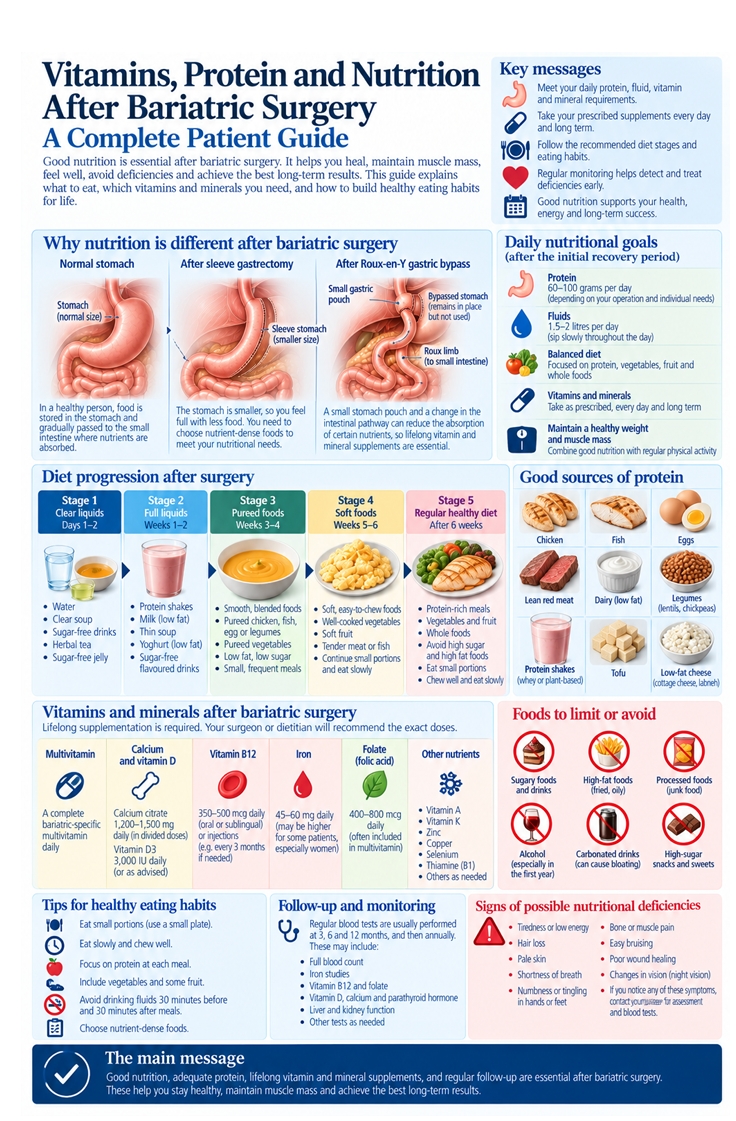
Bariatric surgery changes how much you can eat and, after gastric bypass, how some nutrients are absorbed. This
is why nutrition after surgery is not simply about eating less. The aim is to make a small intake nutritionally effective:
enough fluid, adequate protein, appropriate vitamins and minerals, and healthy foods that support long-term
metabolic health.
Nutritional deficiencies can develop quietly before symptoms appear. Long-term supplements, blood tests and
dietetic follow-up are therefore part of bariatric treatment rather than an optional extra.
Why nutrition changes after sleeve gastrectomy
After sleeve gastrectomy the intestinal route is preserved, but stomach capacity is greatly reduced. Patients may
therefore struggle to consume enough protein, iron, vitamin B12, folate, vitamin D and other nutrients if food quality
and supplementation are neglected.
Why nutrition changes after Roux-en-Y gastric bypass
Gastric bypass combines reduced intake with altered nutrient absorption. Food bypasses the duodenum and
proximal small bowel, making long-term surveillance of iron, calcium, vitamin B12 and other micronutrients
especially important.
Protein comes first
Protein supports wound healing and helps preserve lean body mass during rapid weight loss. Because meal volume
is small, patients are generally taught to prioritise the protein component of the meal before lower-protein foods.
Hydration remains essential
Patients cannot drink a large volume quickly after surgery. Fluids therefore need to be taken regularly in small
amounts throughout the day. Persistent difficulty drinking can rapidly lead to dehydration
The staged postoperative diet
The stomach and any new gastrointestinal connections need time to heal. Diet therefore progresses in stages from
liquids toward puréed or soft foods and eventually a healthy regular diet. The exact timing should follow the patient's
bariatric dietitian rather than a generic timetable.
Learning to eat differently
Small portions, slow eating and thorough chewing become important. Patients should stop when they first feel
fullness, pressure or discomfort. Continuing to eat beyond that point can produce pain, regurgitation or vomiting.
Protein-rich foods
Useful protein sources can include eggs, fish, poultry, lean meat, dairy products, legumes, tofu and appropriate
protein supplements. Tolerance varies, especially during the early postoperative stages.
Protein supplements
Protein shakes can be useful while normal food intake is limited, but they are usually a bridge rather than the
long-term foundation of the diet. As recovery progresses, nutrient-dense whole foods become increasingly
important.
Why vitamins are lifelong
A bariatric multivitamin helps provide nutrients that may be difficult to obtain consistently from a small food volume.
Supplement requirements differ between sleeve and bypass and should be adjusted according to laboratory results.
Iron
Iron deficiency can cause fatigue, breathlessness and anaemia. Risk is particularly important after gastric bypass
and in menstruating women. Iron levels and blood counts need regular monitoring.
Vitamin B12 and folate
Reduced gastric acid and altered gastrointestinal anatomy can impair vitamin B12 absorption. Folate deficiency can
also occur. Both are important for normal blood formation and neurological function.
Calcium and vitamin D
Calcium and vitamin D are important for long-term bone health. Gastric bypass can increase the risk of calcium
malabsorption, making supplementation and biochemical monitoring particularly important.
Thiamine: the deficiency we must not miss
Thiamine deficiency can develop rapidly when a patient has persistent vomiting or very poor intake. It can cause
serious neurological injury. Repeated vomiting after bariatric surgery therefore requires prompt assessment rather
than simply waiting for it to settle.
Other micronutrients
Depending on the operation, diet and laboratory findings, monitoring may also include vitamins A and K, zinc,
copper, selenium and other nutrients. Supplementation should be individualised.
Hair loss after surgery
Temporary hair shedding can occur during rapid weight loss. It is often related to the physiological stress of surgery
and rapid weight change, but inadequate protein, iron, zinc or other deficiencies should be considered if hair loss is
marked or persistent.
Food quality still matters
A smaller stomach does not prevent high-calorie eating. Sugary drinks, frequent sweets, grazing and calorie-dense
processed foods can provide substantial energy without producing the satiety expected from a protein-focused
meal.
Alcohol after bariatric surgery
Alcohol is calorie-dense and its effects can change after bariatric surgery, particularly gastric bypass. Patients
should discuss alcohol use with their bariatric team and avoid assuming that preoperative tolerance will remain the
same.
Why carbonated drinks can be uncomfortable
Carbonation can cause bloating and discomfort in some patients. Sugary carbonated drinks also provide calories
with little nutritional value.
What about vegetables, fruit and fibre?
These remain important parts of a healthy long-term diet, but protein is prioritised when gastric capacity is limited.
Fibre intake should increase gradually alongside adequate hydration.
What if food keeps getting stuck?
Repeated regurgitation, dysphagia or vomiting is not simply a dietary failure. It may indicate stenosis, angulation,
ulceration or another anatomical problem and should be assessed.
Blood tests after surgery
Regular laboratory monitoring is used to identify deficiencies before they become clinically important. The exact
tests and frequency depend on the operation, previous results, symptoms and individual risk.
Nutrition and weight regain
Long-term weight control is influenced by physiology, medications, eating behaviour and anatomy. Grazing,
calorie-containing drinks and frequent highly processed foods can reduce the satiety advantage of surgery.
Significant regain deserves a structured assessment rather than blame.
The role of the dietitian
The dietitian remains important after the operation, not just before it. Dietetic review helps adjust protein intake,
supplements, meal structure and strategies for food intolerance or weight regain.
Nutrition is lifelong bariatric care
Even patients who feel well and maintain excellent weight loss can develop silent deficiencies. Long-term nutritional
surveillance is therefore part of maintaining the health benefits of surgery.
My nutritional pathway
I involve a dietitian before surgery and perform a full metabolic and nutritional screen. After surgery,
patients progress through a structured diet with emphasis on hydration and protein, receive PPI therapy
during healing and continue appropriate vitamin and mineral supplementation. During rapid weight loss I
also offer UDCA when appropriate to reduce gallstone formation. Nutritional blood monitoring continues
long term.
Frequently Asked Questions
Will I need vitamins even after sleeve gastrectomy?
Yes. Sleeve preserves the intestinal route, but reduced intake can still produce deficiencies.
Are supplements more important after gastric bypass?
Yes. Intestinal rerouting adds a greater risk of malabsorption, so lifelong supplementation and monitoring are
especially important.
How much protein do I need?
The target is individualised according to your operation, body size, recovery and dietetic assessment.
Can I get all my protein from shakes?
They can help early on, but the long-term aim is a balanced diet based mainly on nutrient-dense foods.
What if I cannot tolerate meat?
Other protein sources can be used, and the dietitian can help adjust texture and food choices.
Is hair loss permanent?
Postoperative shedding is often temporary, but significant or persistent hair loss should prompt review of protein and
micronutrient status.
Why is vomiting particularly concerning?
Besides dehydration and possible surgical causes, prolonged vomiting can rapidly cause thiamine deficiency.
Can I stop vitamins if my blood tests are normal?
Not without advice. Normal results may reflect effective supplementation.
Do I need blood tests if I feel completely well?
Yes. Many nutritional deficiencies are initially silent.
Is bariatric nutrition just a temporary diet?
No. The early staged diet is temporary, but healthy eating, supplementation and monitoring are lifelong.
The key message
After bariatric surgery, nutrition becomes more important, not less. Prioritise hydration and protein, take
the prescribed vitamin and mineral supplements, progress food gradually and continue long-term blood
monitoring. The objective is not simply weight loss—it is weight loss while preserving health, muscle and
nutritional wellbeing.
Patient-information note: supplement doses, protein targets, diet stages and laboratory schedules should be individualised by your bariatric team and dietitian.
Dr. Mohammed Alassaf
Consultant Bariatric & Gastrointestinal Surgeon
Dr. Alassaf is a leading expert in minimally invasive and bariatric surgery,
with extensive experience helping patients overcome obesity and related conditions.
Having completed advanced training in Australia and the Middle East, he is known
for his compassionate approach and evidence-based surgical care.